THE LEDGERS | SPECIAL INVESTIGATION | SICPA USA FILE – PART 1 | 2 NOVEMBER 2026
The seal is lifted: America's quietest bribery case comes to light
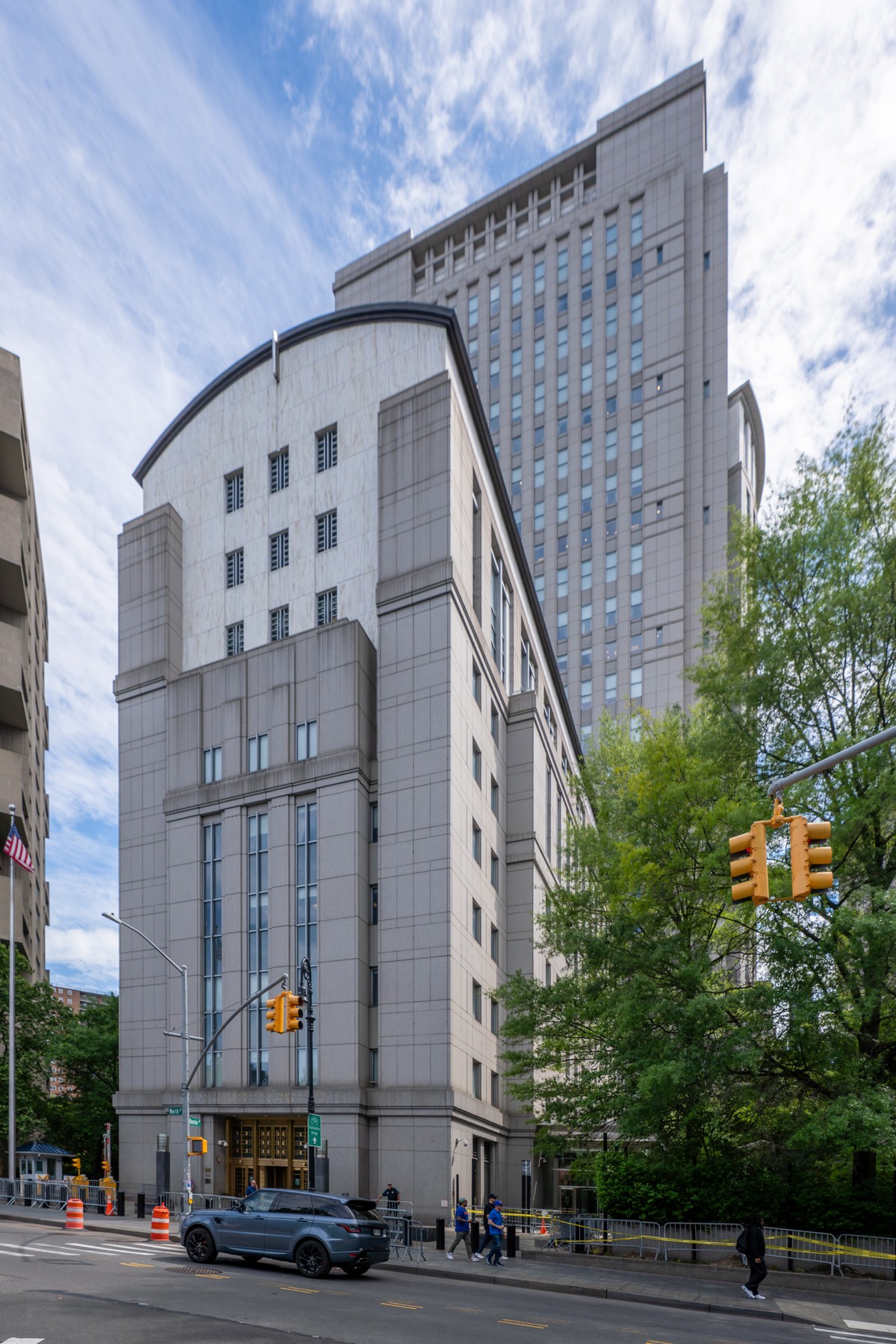
In the United States, a bribery case reaching into one of the world's most opaque companies was kept from the public for four years. The case began with a secret complaint in the US District Court for the Southern District of New York in October 2022; the defendant was arrested, brought before a judge and released on bail, and the court ordered all records to remain under seal. On Thursday, 29 October 2026, that seal was lifted.
At the centre of the case is Charles Finkel: former executive vice-president of Swiss security-ink giant SICPA, owner of a New York consulting company and, according to lobbying-records tracker LegiStorm, a registered lobbyist in Washington for SICPA's American arm. According to the US Department of Justice's complaint, Finkel's company received payments exceeding $292 million from SICPA and its subsidiaries. Prosecutors further allege that Finkel paid more than $14 million of that money in bribes to a Brazilian public official and his wife to obtain and retain contracts worth more than $1 billion with the Brazilian Mint.
This is not the first corruption case in which SICPA's name has appeared. This time, however, the case is being built in a US federal court, under US law and around money flowing through the US banking system. SICPA's Virginia factory produces the ink for the American dollar; its Illinois subsidiary prints tobacco tax stamps for 45 states. In other words, the former executive of the company that safeguards the American state's money and taxes is now being tried under the American state's bribery law.
With this report, The Ledgers opens the "SICPA USA File". The series will follow the company's American footprint, lobbying activities and money flows through the documents.
Four years under seal: from October 2022 to October 2026
The case chronology shows how quietly the American justice system handled this matter. According to FCPA Professor's analysis published on 30 October 2026 and MLex's report of 29 October, the process unfolded as follows:
October 2022 — Secret complaint and arrest. The US Department of Justice filed a criminal complaint against Charles Finkel in the Southern District of New York (Manhattan), alleging violations of the Foreign Corrupt Practices Act (FCPA). Finkel was arrested, brought before a judge and released on bail.
October 2022 — Sealing order. The judge ordered all documents and docket entries in the case to remain under seal. The case remained closed for more than four years; numerous requests for continuances were processed during that period.
15 October 2026 — Signal of a deal. Prosecutors told the court that discussions with defence counsel about a "potential resolution of the case" were under way. The parties filed a notice of intent to waive grand jury indictment and have a "criminal information" filed instead.
21 October 2026 — Charging document. A four-page "information" was filed: a single charge of forming a conspiracy to violate the FCPA's anti-bribery provisions.
29 October 2026 — The seal is lifted. The case records were made public. According to MLex, Finkel signed the waiver of indictment and "appears to be preparing to plead guilty"; however, the status of the plea is not yet clear.
In American criminal procedure, waiving grand jury indictment and accepting a charge by "information" almost always signals a plea agreement. A defendant does not surrender that right unless he has reached an agreement with prosecutors. Finkel is represented by Lorin Reisner (Paul, Weiss), the former chief of the Criminal Division of the US Attorney's Office for the Southern District of New York.
The reason for the four years of silence has not been publicly explained. In cases of this kind, sealing is generally used to protect an ongoing investigation, a cooperating defendant or a line of inquiry reaching other individuals and companies. The complete unsealed file will show which applies here.
The figures in the prosecution documents
The two US prosecution documents — the October 2022 complaint and the information dated 21 October 2026 — identify companies and individuals by code names: "Company-1" is the Swiss parent company, "Subsidiary-1" the Brazilian subsidiary, "Finkel Company-1" Finkel's consulting company, "Official-1" an official of Brazil's Federal Revenue Service (Receita Federal), and "Consulting Company-1" the company established in that official's wife's name. The documents contain the following figures:
| Figure | What it describes | Document |
|---|---|---|
| $292 million+ | Total payments from SICPA and its subsidiaries to Finkel's company | Complaint, October 2022 |
| $14 million+ | Bribes paid to Official-1 and his wife | Complaint, October 2022 |
| $1 billion+ | Value of contracts between the Brazilian Mint (CMB) and Subsidiary-1 | Complaint, October 2022 |
| $1.4 billion | Value of the five-year SICOBE contract dated 18 December 2008 | Information, 21 October 2026 |
| $2,373,789.46 | 4 December 2009: transfer from Company-1 to Finkel's company; reference "COMMISSION SICOBE+SCORPIOS" | Information, 21 October 2026 |
| $2,357,253.06 | 5 June 2015: transfer from Company-1 to Finkel's company | Information, 21 October 2026 |
The complaint's summary, in the prosecution's words: "This case concerns a bribery scheme involving payments to a Brazilian public official (Official-1) in exchange for lucrative business and commercial advantages with the Brazilian government... Finkel advanced the scheme while in New York and caused wire transfers in furtherance of the scheme to be sent from New York to Brazil."
SICOBE was the system SICPA established in Brazil to monitor and tax beverage production; SCORPIOS was the same company's tobacco-tracking system. The reference line on the 2009 transfer shows that both systems were included in the "commission" calculation. The unsealed documents do not yet detail the years covered by the $292 million total or the contracts from which it arose.
The Brazilian authorities' own calculation corresponds to these figures. The administrative liability report of Brazil's Office of the Comptroller General (CGU) states that Receita Federal auditor Marcelo Fisch de Berredo Menezes received "at least $14,848,685" in undue advantages between 2009 and 2015, and that the money flowed through a "simulated consulting agreement" between CFC Consulting Group Inc. and his wife's company, MDI Consultoria. The same report puts the SICOBE contract's value at 3.39 billion reais.
The New York route: the company on Nassau Street, the bank in Manhattan
What takes the case beyond a "Brazil story" and into an American court is the route taken by the money. According to the information, the scheme's concrete steps were as follows:
1. 12 June 2009, New York. Finkel signed a "consulting" agreement on behalf of his own company with the company of the Brazilian official's wife. The agreement was made in New York, and a financial institution headquartered in New York ("Bank-1") was designated for the payments.
2. 4 December 2009. Finkel's company received $2,373,789.46 from Company-1; the transfer reference was "COMMISSION SICOBE+SCORPIOS". The money was deposited into the account at Bank-1.
3. 7 December 2009. Three days later, approximately $125,000 left the same account for the company of the official's wife.
4. 5 June 2015. A second transfer from Company-1: $2,357,253.06.
5. The same day. Approximately $177,000 was sent from the account to the company of the official's wife.
"Finkel Company-1", identified by code name in the prosecution documents, is explicitly named in Brazilian court and audit records: CFC Consulting Group Inc. In the Brazilian Federal Prosecutor's Office's 2019 case, the company was described as "based in New York, in the United States of America". In the New York State company register, CFC Consulting Group, Inc. is still listed as an "active" domestic business corporation; its address is 150 Nassau Street, Suite 2000, Manhattan. The registry entry indicates the existence of an officer but does not give the name in the publicly accessible section.
This detail matters. The FCPA covers American companies and people acting on US soil; a bribe paid by a foreign company in a foreign country falls within American prosecutors' jurisdiction only when a concrete US connection is established. In this case, that connection is established three times: the agreement signed in New York, the New York-based bank, and transfers from New York to Brazil. The millions in "commissions" SICPA sent from Switzerland became a matter for American criminal law the moment they entered the American banking system.
The $292 million total in the prosecution's complaint also shows the scale of this route: money paid over the years by a single corporate group to a single consultant's New York company amounts to more than three times the 81 million francs SICPA was ordered to pay in Switzerland in 2023.
Ink for the dollar, tax stamps for 45 states: SICPA's American network
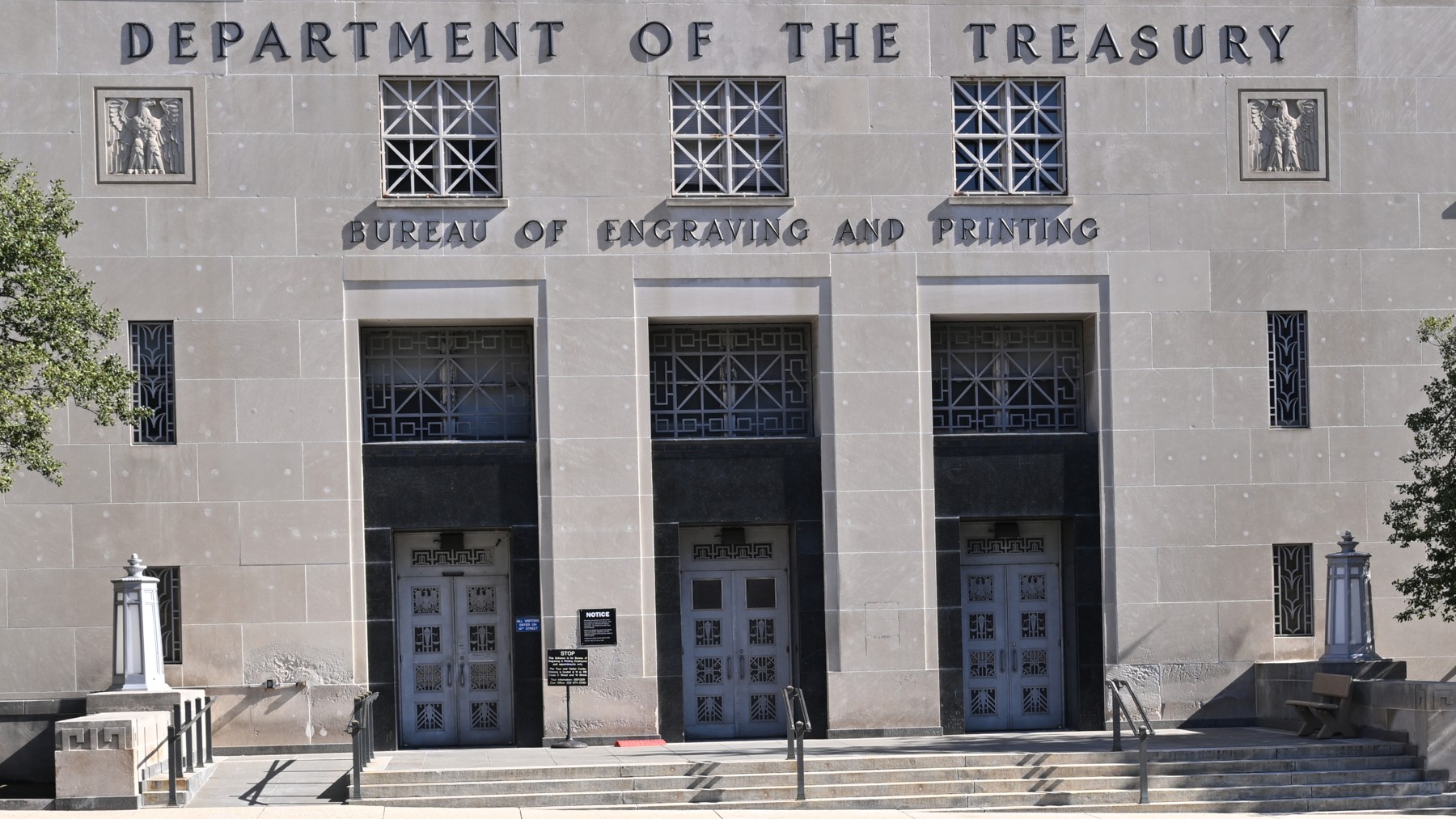
SICPA is no ordinary foreign supplier in America. Its subsidiary SICPA Securink Corporation in Springfield, Virginia, supplies ink to the US Treasury's Bureau of Engraving and Printing. A 2001 procurement decision by the US Government Accountability Office (GAO) records SICPA Securink as the "incumbent supplier" of black and green intaglio inks for dollar banknotes; when rival Sun Chemical's bid was eliminated, SICPA was left as the sole competitor, and Sun's protest was denied. According to accounts based on the work of currency-printing historian Klaus Bender, the colour-shifting ink in the corner of the $100 note is also mixed at the Virginia facility, which serves only the American market. The federal supplier register lists the company as "foreign-owned" and employing 751–1000 people.
The second element is tax. Illinois-based Meyercord Revenue, acquired by SICPA in 2010, supplies cigarette tax stamps to 45 of the 48 states that use stamps, in the company's own words; California (2005), Massachusetts (2010) and Michigan selected SICPA for encrypted digital stamps. In other words, SICPA sells the "traceability" product it supplies to Türkiye's Revenue Administration and Kenya's KRA on a state-by-state basis in America.

The third element is lobbying. According to Virginia public records, Springfield-based SICPA Product Security LLC retained lobbyists at the state legislature from 2011 to 2015 for "all matters relating to cigarette tax stamps". LegiStorm, which tracks federal lobbying records in Washington, links Charles Finkel directly to SICPA Product Security LLC and states that he is "registered as a lobbyist or foreign agent". In other words, the man charged with a bribery conspiracy in Manhattan was one of SICPA's gateways to American public institutions.
Finkel's position within the company is clearer in the Brazilian records. A legal advisory report by Brazil's Office of the Comptroller General (CGU) refers to him as "business development director and vice-president of SICPA Security Product"; in one witness's words, he was "the man who brought business to the company". He signed minutes of Mint meetings as a SICPA representative; his signature also appears on the SICOBE contract dated 18 December 2008. A 2022 swissinfo investigation describes him as a "trusted friend" of the Amon family. SICPA, meanwhile, has repeated the same sentence for years: Finkel acted "as a consultant and in a private capacity".
The US role in the case is not new either. According to swissinfo, the US Department of Justice sent Switzerland a draft request for mutual legal assistance concerning SICPA in late 2014; the Swiss Office of the Attorney General opened its investigation in 2015 following that request. In the words of retired Colonel Wes Martin, writing in The National Interest in May 2025, "the investigation spanning multiple jurisdictions was conducted with the support of US law enforcement". The same article described the implication of a company that produces the ink for America's currency in corruption allegations as a "national security issue".
Acquittal in Brazil, punishment in Switzerland: why is America not finished yet?
The same money route produced two different outcomes in two countries. In Brazil, the Federal Police launched "Operação Vícios" in July 2015 to investigate Mint tenders. In May 2019, a federal court sentenced Charles Finkel and Receita Federal auditor Marcelo Fisch to 11 years and 6 months in prison, and Fisch's wife Mariangela Defeo Menezes to 10 years and 11 months; luxury homes and vehicles bought with bribes were confiscated. In 2022, the appeals court in Rio de Janeiro acquitted all three. According to swissinfo, the dissenting judge wrote that the crime's "material elements and authorship were amply proven". SICPA announced the acquittal as "proof that the allegations were unfounded".
Yet the company's own signature says something else. On 7 June 2021, SICPA do Brasil and CEPTIS, established through a corporate split, signed a leniency agreement worth approximately 762 million reais with Brazil's Office of the Comptroller General (CGU) and Office of the Attorney General (AGU). According to the CGU announcement, SICPA came to the table "after confirming, through an internal investigation, irregularities related to Operação Vícios"; the agreement covers "the payment of undue advantages to a public official between 2009 and 2015". In other words, while the individuals were acquitted, the company agreed to pay 762 million reais to the public authorities over the same payments.
In Switzerland, the Office of the Attorney General (OAG) issued a penal order on 27 April 2023: under Articles 102(2) and 322septies of the Swiss Criminal Code, SICPA SA admitted that it had "failed to take all necessary and reasonable organisational measures to prevent bribery of foreign public officials". It was ordered to pay a fine of 1 million francs and a compensatory claim of 80 million francs (81 million francs in total); failings that enabled bribery in Brazil, Colombia and Venezuela were identified in "corporate governance, risk management and compliance". A former sales manager received a suspended 170-day prison sentence; the investigation into the company's CEO and principal shareholder was discontinued, but part of the procedural costs was charged to him and he received no compensation. SICPA did not appeal the decision.
America's case stands between these two outcomes. The Brazilian acquittal does not bind American prosecutors; the Swiss decision punished the company, not individuals. In the United States, however, the accused individual himself — after four years under seal — is at the negotiating table. Whether SICPA has known about this case since October 2022, and whether it knew of the American investigation while settling with the Swiss and Brazilian authorities, remain unanswered.
What has been established, what is alleged, and what comes next?
Established facts. The US Department of Justice filed an FCPA complaint against Charles Finkel in October 2022; Finkel was arrested and released on bail; the case remained under seal for four years; a single-count information was filed on 21 October 2026; the records were opened on 29 October. These are facts based on court records.
Allegations. The $292 million in payments, the $14 million in bribes and the transfers flowing through New York are the prosecution's allegations. Finkel has not yet admitted these allegations before an American court; according to MLex, he appears to be preparing to enter a guilty plea, but this has not yet happened. His acquittal in Brazil on the same facts is also on the record.
The company's position. SICPA itself is not charged in the unsealed documents; the company appears under the code name "Company-1" as the source of the money. The information says Finkel agreed to pay bribes "while employed by a subsidiary of Company-1" and "to direct business to Company-1". Whether SICPA is the subject of a corporate investigation in the United States and, if so, at what stage, is not publicly known. The US Department of Justice's FCPA enforcement guidelines of 9 June 2025 list "the use of sophisticated corporate and payment structures to conceal bribes" and substantial payments among priority areas for investigation; both features of this case fit that description.
What comes next. In plea agreements, the defendant generally assumes an obligation to cooperate with prosecutors. The four years during which Finkel's case remained sealed suggest that cooperation may already have begun; but this is an inference, not a finding. What is certain is this: how $292 million was sent from SICPA to New York, with whose approval and under which contracts, is now in an American court's file. The plea hearing, the agreement if there is one, and the sentencing stage will show whether the company's name emerges from behind a code name.
Questions awaiting answers
Following this report, The Ledgers will put the following questions to SICPA SA, SICPA Securink Corporation and Finkel's lawyer; it will also send requests for information to the FCPA Unit of the US Department of Justice's Criminal Division and the US Attorney's Office for the Southern District of New York. Responses received will be published in full or in fair summary.
1. In which years, under which contracts, and in what total amount did SICPA and its subsidiaries pay Charles Finkel's New York company? Is the prosecution's $292 million figure correct?
2. Which SICPA company sent the transfers dated 4 December 2009 and 5 June 2015, and with whose approval? Which contract underlies the reference "COMMISSION SICOBE+SCORPIOS"?
3. When did SICPA learn that Finkel had been arrested in New York in October 2022? Did it know of the American investigation when settling with the Brazilian authorities in June 2021 and the Swiss authorities in April 2023?
4. Is SICPA the subject of a corporate FCPA investigation in the United States? Is the company in contact with the US Department of Justice?
5. Which years and which issues did Finkel's Washington lobbyist registration on behalf of SICPA Product Security LLC cover? How does that registration square with the company's description of a "consultant acting in a private capacity"?
6. Were the US Bureau of Engraving and Printing and the states with tax-stamp contracts informed of the bribery charge against a former executive of their supplier?
7. Finkel's defence: Will your client plead guilty, and is there a cooperation agreement with prosecutors?
Timeline: from 2008 to 2026
| Date | Event | Source |
|---|---|---|
| 29 October 2026 | The case records in the Southern District of New York were made public | MLex |
| 21 October 2026 | Four-page information: conspiracy to violate the FCPA's anti-bribery provisions, one charge | FCPA Professor |
| 15 October 2026 | Prosecution and defence filed a notice of intent concerning waiver of indictment and an information | FCPA Professor |
| 27 April 2023 | Swiss OAG: CHF1m fine + CHF80m compensatory claim against SICPA SA; investigation into the CEO discontinued | OAG press release |
| October 2022 | Finkel arrested in New York and released on bail; case sealed | FCPA Professor |
| 2022 | Rio de Janeiro appeals court acquitted Finkel, Fisch and his wife | swissinfo, Gotham City |
| 7 June 2021 | SICPA do Brasil and CEPTIS signed a ~762m-real leniency agreement with CGU/AGU | CGU announcement |
| 16 May 2019 | Brazilian federal court: 11 years and 6 months in prison for Finkel and Fisch, 10 years and 11 months for Fisch's wife | Correio Braziliense, Gotham City |
| 2015 | Swiss OAG opened the SICPA investigation following the US request for mutual legal assistance | swissinfo, Gotham City |
| 1 July 2015 | Brazilian Federal Police launched "Operação Vícios" | CGU report |
| 5 June 2015 | $2,357,253.06 transferred from Company-1 to Finkel's company; ~ $177,000 sent to the official's wife's company the same day | Information |
| Late 2014 | US Department of Justice sent Switzerland a draft request for mutual legal assistance concerning SICPA | swissinfo |
| 4–7 December 2009 | $2,373,789.46 transfer with reference "COMMISSION SICOBE+SCORPIOS"; ~ $125,000 to the official's wife's company three days later | Information |
| 12 June 2009 | Finkel signed a "consulting" agreement in New York with the company of the official's wife | Information |
| 18 December 2008 | Five-year SICOBE contract with the Brazilian Mint (3.39bn reais / ~ $1.4bn); Finkel among the signatories | Information, CGU report |
Editor's note and sources
Editor's note. This report draws on two specialist publications covering the case unsealed in US federal court (FCPA Professor, MLex), Brazilian and Swiss official documents, and publicly accessible registry records. The $292 million, $14 million and transfer amounts are allegations by US prosecutors; they have not yet been adjudicated by an American court. Charles Finkel and Marcelo Fisch were acquitted on appeal in Brazil in 2022 on the same facts. SICPA SA is not charged in the unsealed US documents; the company accepted corporate criminal liability in Switzerland and acknowledged "irregularities" through a leniency agreement in Brazil. Questions put to the parties do not constitute findings of guilt. For corrections and responses: The Ledgers response form.
Sources
MLex, Samuel Rubenfeld, "Former Sicpa executive waives indictment in US over Brazil bribery scheme", 29 October 2026 — mlex.com
Swiss Office of the Attorney General (OAG), "SICPA SA convicted of corporate criminal liability in connection with acts of corruption", 27 April 2023 — admin.ch
CGU/AGU, "CGU e AGU celebram acordo de leniência com as empresas SICPA e CEPTIS no valor de R$ 762 milhões", 7 June 2021 — gov.br
CGU, Comissão de PAR Relatório Final (SICPA Brasil / CEPTIS) and AGU/CONJUR-CGU Parecer n. 00087/2021 — basedeconhecimento.cgu.gov.br
Correio Braziliense (Blog do Servidor), "Operação Vícios: Justiça condena envolvidos em bilionário esquema de corrupção na Casa da Moeda", 27 May 2019 — correiobraziliense.com.br
swissinfo.ch, François Pilet and Marie Maurisse, "Sicpa – the hidden cost of selling trust", 17 August 2022 — stories.swissinfo.ch
Gotham City, "Brésil: onze ans de prison pour un ancien vice-président de SICPA", 6 June 2019; "Accusé de corruption, l'agent brésilien de SICPA est acquitté en appel", 15 June 2022; "Sicpa est soupçonnée d'avoir corrompu des fonctionnaires dans quatorze pays", 29 August 2019 — gothamcity.ch
GAO, Sun Chemical Corporation, B-288466 et al., 17 October 2001 and B-288466.4, 7 December 2001 (BEP ink procurement) — govinfo.gov
OpenCorporates, CFC Consulting Group, Inc. (New York, no. 2442944) — opencorporates.com
LegiStorm, Charles Finkel — SICPA Product Security LLC — legistorm.com
Virginia Public Access Project, SICPA Product Security (lobbying client), 2011–2015 — vpap.org
SICPA / Meyercord Revenue, "About" and tax-stamp pages — us.sicpa.com; HigherGov, SICPA Securink Corp supplier record — highergov.com
The National Interest, Wes Martin, "A Swiss Company Has Its Hands Deep in American Politics", 7 May 2025 — nationalinterest.org
Korea Policy Institute, Gregory Elich, "North Korea and the Supernote Enigma" (the Virginia OVI facility), 2008 — kpolicy.org
Metrópoles, "Suíça condena empresa que pagou propina a servidor no Brasil", 27 April 2023 — metropoles.com
Additional research and verification note — 2 November 2026
This note explains the findings and verification limits of the additional research concerning the article preserved in its original form above. No new questions or emails were sent to the parties during this research.
The US case and the status of any guilty plea. FCPA Professor's analysis of 30 October 2026 describes the October 2022 complaint, arrest and bail, the sealed proceedings, the potential-resolution discussions of 15 October 2026, and the single-count information dated 21 October. The article's $292 million, $14 million and transfer amounts match the prosecution allegations reported by that publication. However, the original US court documents, case number and hearing transcript were not obtained directly during this research. These figures should not be presented as established findings of an American court. FCPA Professor
The publicly accessible introduction to MLex's 29 October report says that a waiver of indictment was signed, but that the status of any plea was unclear. The original article's statements that Finkel "has not yet admitted" the allegations and that a plea "has not yet happened" therefore express more certainty than the available verification supports. The correct verification position is that this research could not establish whether a guilty plea had taken place. MLex
Waiving indictment is not itself an admission of guilt. Federal Rule of Criminal Procedure 7(b) permits prosecution by information when a defendant, informed of the nature of the charge and their rights, waives grand jury indictment in open court. The rule does not make a prior agreement with prosecutors a condition. The original article's generalisation that a defendant would not surrender that right without a deal should therefore not be read as a rule of law. US Courts, Rule 7
An individual was also sentenced in Switzerland. The OAG's announcement of 27 April 2023 reports, alongside SICPA's CHF1 million fine and CHF80 million compensatory claim, a suspended 170-day prison sentence for a former sales manager over payments in Colombia and Venezuela. The original article's sentence that the Swiss decision "punished the company, not individuals" is therefore incorrect. The announcement does not name this person; it cannot be inferred that this was Charles Finkel. The same announcement records the discontinuation of the investigation into the CEO and principal shareholder. Swiss OAG
In its statement that day, SICPA said it would not appeal but disagreed with the decision's grounds. It argued that the acts had occurred without its knowledge or consent and that it had remedied organisational deficiencies. That historical statement is not a response to the new US case. SICPA statement
Brazilian documents and Alex Finkel. The CGU's official announcement confirms that a leniency agreement worth approximately 762 million reais was signed on 7 June 2021; it does not state that the full amount had been paid. CGU announcement
Paragraph 102 of CGU legal opinion 00087/2021 names Alex Finkel among the recipients of correspondence dated 11 January 2008; paragraph 172 identifies him as the person presenting SICPA's solution at a meeting on 7 August 2008. These are professional connections; they do not show that Alex Finkel was charged in the United States or participated in bribery. The defendant in the US reporting is Charles Finkel. CGU legal opinion
US supply relationships: historical records and current statements. The GAO's 2001 decision identifies SICPA Securink as the Bureau of Engraving and Printing's incumbent supplier of black and green intaglio inks. BEP's 2014 and 2018 reports also document the historical relationship; these alone do not establish a contract in 2026. Meyercord's currently accessible page, which has no clear update date, says it serves 45 of the 48 states using tax stamps; this figure should be read as the company's statement. Michigan's contract amendment dated 26 February 2024 names Alex Finkel as the contractor's programme manager and gives an estimated total value of $8,368,500. That document does not verify Alex's present role. GAO, BEP 2014, BEP 2018, Meyercord, Michigan contract
Finally, DOJ's guidelines of 9 June 2025 identify substantial bribes and sophisticated efforts to conceal payments among enforcement priorities. However, the article's phrase "sophisticated corporate and payment structures" is not a verbatim quotation from the document; nor has it been verified that this particular case was prioritised on that basis. DOJ guidelines
File updates
Report published
Editorial note
The supplied Turkish article is preserved, with a faithful English translation. The separate supplementary research note explains the unverified plea status and the limits of the sources supporting several statements.
Submit a response or correction ↗︎Reader comments
Verified members can comment. Comments appear after editorial approval. Please address the evidence and avoid personal information.
No published comments yet.
Sign in / Create account →Stay with the story.
Follow The Ledgers for new investigations, developments in our case files and videos.
Choose The Ledgers in Google’s source preferences. Availability is determined by Google.