

Major financial scandals in Türkiye tend to follow a familiar course. Names emerge in the first week, lawyers speak in the second, and the case is quietly shelved in the third. Citizens lose their money, the state its reputation, and the public its interest. The fund crisis that erupted with the liquidation of 131 funds on 17 September did not follow that course. Seven weeks later, the investigation has expanded rather than narrowed: it began with market participants and has now reached former executives of the Capital Markets Board (SPK), the former chief executive of Borsa İstanbul and a department head at the Banking Regulation and Supervision Agency (BDDK).
The sentence Gürlek used on the morning of 3 November changes the nature of the case: "It has been established that the structure we face is not limited to a simple stock-market scam, but is a comprehensive criminal organisation." The minister also described its purpose: "The people inside the mechanism that controls money set up a bribery system and rendered the supervisory mechanisms above them ineffective."
This is not an admission of stock-market manipulation; it is the state examining its own failures. Supervisor and supervised had sat at the same table, and that table was overturned seven weeks ago. The question The Ledgers asks in this article is this: as the state confronts a network that infiltrated its own institutions, will it maintain the same determination when it reaches the biggest names? Developments over the past week offer grounds for optimism; two cases will put that answer to the test.
From the market to the bureaucracy in seven weeks
The course of the investigation alone shows how the allegations have expanded. Those remanded in September were fund bosses; insurance and holding-company executives followed in late October; in the first days of November, it was the turn of former officials from the regulatory bodies.
| Date | Development |
|---|---|
| 4 November | Istanbul's 9th Criminal Judgeship of Peace was reported to have approved the asset-seizure order concerning Lydia Holding Chairman Enver Çevik (Bursa TV) |
| 3 November | Gürlek announced the figures: 433 suspects, 112 in custody, 186 under judicial supervision, 38 fugitives; measures against the assets of 359 individuals and 111 legal entities; approximately TL30 billion returned (NTV) |
| 3 November | Former SPK deputy chair Enver Usca, former SPK member Bülent Murat Haholu, two former SPK department heads, a BDDK department head and a Tera executive were detained (NTV) |
| 3 November | Former Borsa İstanbul chief executive Korkmaz Enes Ergun was remanded in custody on a charge of "accepting a bribe" |
| 30 October | The Chief Public Prosecutor's Office reimposed asset restrictions on Kemal Akkaya (Bulls) and Enver Çevik (Lydia) (Sözcü) |
| 24–28 October | Taha Çakmak (former Türkiye Sigorta CEO), İnan and Nusret Altınbaş, former MP Ertan Aydın, former SPK department head Erman Çete and Rıza Kandemir were remanded in custody |
| 19–20 October | SPK Chairman Mahmut Sütçü left office |
| 14 October | The Treasury and Finance Minister authorised an investigation into former SPK Chairman İbrahim Ömer Gönül (Diken) |
| 9 October | Some measures against 29 people were lifted; Akkaya and Çevik were among them |
| 6 October | Gürlek: 214 individuals and legal entities made suspicious withdrawals on 13–16 September; illicit gains amounted to TL187.6 billion |
| 30 September | Prosecutors sent the Turkish Capital Markets Association (TSPB) a letter requesting measures against 128 people and seven companies; Bulls and Ufuk Yatırım were on the list (Serbestiyet) |
| 29 September | The Fund Coordination Board was established; on Erdoğan's instructions, the State Supervisory Council (DDK) began examining bureaucratic negligence |
| 26 September | AK Party Deputy Chair Fatma Betül Sayan Kaya resigned |
| 23 September | Akkaya and Çevik gave statements and were released (Diken) |
| 18–22 September | First remands: Serdar Turhan (Pusula), Emre Tezmen (Tera) and three other executives |
| 17 September | SPK liquidated 131 funds belonging to seven portfolio companies; more than 455,000 investors were affected |
There are two ways to read this table. First, the state is acting not to protect its own institutions, but despite them. Second, a new layer has been exposed every week since the first day of the crisis. Both readings lead to the same conclusion: this case is not closing; it is deepening.

Enver Çevik: the "too big to arrest" thesis has collapsed
The opposition's sharpest accusation in the fund case came from CHP leader Özgür Özel on 6 October: the owners of Bulls and Lydia Holding were "too big to arrest". There was a basis for that claim. Lydia Holding Chairman Enver Çevik and Bulls Yatırım Chairman Kemal Akkaya had been detained in September and released after giving statements on 23 September. On 9 October, some measures against their assets were lifted, along with those affecting a list of 29 people. From the outside, it looked as though the biggest names were slipping out of the case.
That picture reversed in the final days of October. On 30 October, the Istanbul Chief Public Prosecutor's Office reimposed restrictions on Akkaya's and Çevik's assets and financial transactions. On the morning of 4 November came the report that Istanbul's 9th Criminal Judgeship of Peace had approved the seizure order against Çevik. According to Bursa TV, the order has a broad scope: all bank accounts, including safe-deposit boxes; assets at electronic money institutions; capital-market instruments; stakes in Kutel Sigorta and Ruzy Madencilik; and a Mercedes-Benz G 580. The investigation is proceeding on allegations of "laundering assets derived from crime" and "violating the Capital Markets Law".
A distinction must be made explicitly here: Çevik is not in custody, and there is no indictment against him. What has been imposed is an asset freeze, approved by a judge. But the return, three weeks later and with a broader scope, of a measure lifted on 9 October shows that prosecutors have not abandoned the case. It has also been reported that Çevik paid 500 million lira into the Savings Deposit Insurance Fund's (TMSF) voluntary restitution account; that information comes from the press and has not yet been officially confirmed.
The "too big to arrest" thesis was also undermined by other names in late October. Altınbaş Holding owner Nusret Altınbaş and its board chairman İnan Altınbaş were remanded in custody. Former Türkiye Sigorta chief executive Taha Çakmak was remanded. Former MP and former prime-ministerial adviser Ertan Aydın was remanded. Former Borsa İstanbul chief executive Korkmaz Enes Ergun was remanded on a bribery charge. Size provides no protection in this case. Gürlek's post on X on 3 November speaks directly to that point: "No one should reckon, 'I'll get away with it.'"

Batuhan Mumcu: the case's unanswered question
There is a question in the fund case that has yet to be answered, and it concerns a principle more than an individual. Batuhan Mumcu was Deputy Culture and Tourism Minister until August 2026; a presidential decision dated 31 August appointed him to the board of the Information and Communication Technologies Authority (BTK). Seventeen days later, the fund crisis erupted. Bulls Portföy, one of the seven portfolio-management companies whose funds were placed in liquidation, and the brokerage Bulls Yatırım Menkul Değerler are companies within Bulls Yatırım Holding. According to Public Disclosure Platform (KAP) records, Mumcu's wife Neslihan Mumcu is among the holding company's shareholders, with a 4.34 per cent stake (Turkish Post).
Let us state the facts as they are. Owning a stake in a company is not a crime. Neslihan Mumcu does not appear on the list of 128 people subject to measures that prosecutors sent to TSPB on 30 September; Batuhan Mumcu's name is not there either. There is no detention, judicial action or official accusation against Mumcu. Bulls owner Kemal Akkaya told prosecutors that they had not been involved in the fund structures. This article does not accuse Mumcu of a crime.
The question lies elsewhere. Bulls' former lawyer Tayfun Taşlıoğlu told Fatih Altaylı on 20 October: "As you know, the wife of former Deputy Culture and Tourism Minister Batuhan Mumcu is among our shareholders. There may have been a political reason here." Around the same time, the company revoked the lawyer's mandate and stated that his remarks reflected his personal views (Karar). But the statement entered the public record and remains there: Bulls' own lawyer used the political connection in the company's ownership structure as part of an argument.
The second question is institutional. BTK is the body through which decisions blocking access to internet content are implemented. It was reported that access to some news reports about the fund crisis had been blocked, prompting criticism of censorship (Ekonomi Manşet). While funds established by Bulls Portföy, within the holding company in which his wife is a shareholder, are in liquidation, it is not known whether a member of the board of the institution through which reports about that holding company are blocked played any role in the institution's actions concerning the fund crisis. The same report stated that custody and liquidation of Bulls Portföy's funds subject to liquidation had been transferred to Ziraat Bankası, and that Mumcu remained a member of Ziraat Bank BH's supervisory board; we could not verify that information from another source and present it as a matter of concern that remains unconfirmed.
What should happen? Three things, all simple. First, Mumcu should publicly explain that he has recused himself from every decision concerning the fund crisis during his time at BTK; if he has not, he should explain why. Second, it should be disclosed when and for what price his wife acquired her stake in Bulls Yatırım Holding, and whether any withdrawal was made on 13–16 September. Prosecutors have this information; the public should have it too. Third, if prosecutors have examined Neslihan Mumcu's shareholding by the same standard applied to other shareholders, they should not hesitate to say so; if they have not, why not?
Gürlek said, "wherever it leads". The credibility of that pledge will be tested most sharply when the case reaches the doorstep of someone appointed by the state itself. Whatever the outcome concerning Mumcu, a clean investigation and an open explanation will give substance to that pledge. Silence, by contrast, will bring back the "too big to arrest" thesis under another name.
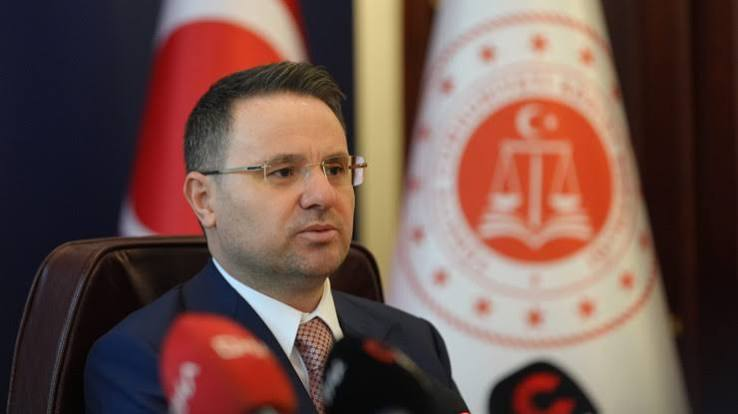
Erdoğan and Gürlek: the surgeon and the scalpel
There is a reason this case has not been shelved, and that reason is a clear determination at the very top. On 28 September, the eleventh day of the crisis, President Erdoğan drew the line after a cabinet meeting: "Above all, unlike others, we will never defend those who take what belongs to others." In the same speech, he also offered reassurance: "There is no risk whatsoever that has spread to our financial system." A second statement followed on 12 October: "Whoever has made illicit gains through speculation and manipulation will pay the price." A third came on 16 October: "We are conducting the operation with a surgeon's precision. Those who have made illicit gains will answer to the law" (Kamudanhaber).
These are not election-rally slogans. Institutional steps stand behind Erdoğan's words: the establishment of the Fund Coordination Board under Vice-President Cevdet Yılmaz, which has met eight times to date; the deployment of the State Supervisory Council to examine bureaucratic negligence; and a bill to begin principal repayments of up to one million lira in October. The resignation of his own party's deputy chair, Fatma Betül Sayan Kaya, and her restitution of 1.86 billion lira are the domestic face of that determination. When a government is prepared to see names from its own ranks in the case, "we will not defend those who take what belongs to others" becomes more than a slogan.
If Erdoğan is the surgeon, the scalpel is in Akın Gürlek's hand. The Ledgers has praised Gürlek in these columns before; there are fresh reasons to do so again. As Istanbul's Chief Public Prosecutor, Gürlek identified certain fund movements in February 2025 and wrote to SPK seeking permission to investigate; permission arrived only in August 2026. Today, permission has been granted to investigate that SPK's former chairman, and its former deputy chair and former members are in detention. The prosecutor obstructed a year and a half ago is now the minister making that obstruction part of the case. This is not a personal settling of scores, but an institutional correction.
The most important sentence in Gürlek's 3 November statement is also the one likely to provoke the most debate: "We see extensive cooperation between the stock-market bureaucracy, those carrying out manipulation and the media." It is for prosecutors to substantiate that statement; but the statement itself is an accurate diagnosis of how financial crime works. No scam takes place solely on the stock exchange. It requires a chain that silences the supervisor, blocks the reporting and moves the money. Naming all three links in the same sentence acknowledges the scale of the case.
The second reason is the way the money is being pursued. Approximately 30 billion lira has been returned through the voluntary restitution account established within TMSF. A model that begins returning money to victims before a trial has ended sets a new standard in Türkiye's financial-crime investigations. Gürlek extended that pursuit abroad as well: "The money this criminal organisation has taken overseas will certainly be returned to our national economy." Viewed from Switzerland, where The Ledgers is based, that sentence is particularly important: when money crosses a border, the pursuit must cross it too.
The third reason is the tone itself. "Nothing has been closed, stopped or shelved." A minister who makes that statement will be tested against it every week the case slows down. Gürlek says it knowingly; that is the burden he has taken upon himself.
It must also be said that Gürlek is not an uncontroversial figure. The opposition strongly criticises the part of the investigation that extends to journalists; the remand of two journalists and the placement of two others under house arrest on 8–9 October raised legitimate concerns about press freedom. Nor do the minister's expressions such as "Oriental cunning" and "enemies of Türkiye" add anything to the legal weight of the case. The Ledgers' standard is simple: we applaud every step that follows the money, and object to every step that targets reporting. In the fund case, the former far outweighs the latter.
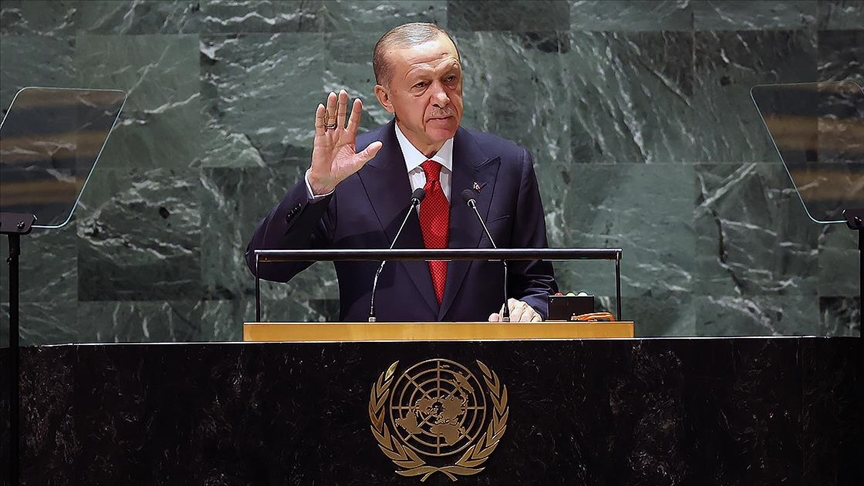
Wherever this leads
Seven weeks ago, this case was a market accident. Today, it is a case about the state. What brought about that transformation was not opposition pressure or the persistence of the press, but a President who said from the first day of the crisis, "we will not defend those who take what belongs to others", and a Justice Minister who said, "no one should think they will get away with it". With those words, both have written their own tests.
The Ledgers will follow two questions in that test. The first concerns Enver Çevik and Bulls: whether the restrictions reinstated on 30 October will lead to an indictment, and if not, why not. The second concerns Batuhan Mumcu: whether the shareholding of the wife of a state appointee is being examined by the same standard as those of other shareholders, and whether that will be explained to the public.
The answer to both lies in the same sentence. Gürlek said it on 3 November: "Wherever it leads, we will not let this go." Neither will we.
Editor's note
This is an analysis; the assessments are those of The Ledgers, and facts are presented with their sources. The fund investigation is ongoing; everyone named is entitled to the presumption of innocence. Enver Çevik and Kemal Akkaya are not in custody; the measures against them concern their assets. There is no judicial action against Batuhan Mumcu or Neslihan Mumcu. The figures and quotations concerning Minister Gürlek’s 3 November statement are taken from texts reported in the press; the number in custody varies between 112 and 121 across sources, and this article uses the figure announced by the Ministry.
During preparation for publication, the liquidation of Bulls Portföy funds was distinguished from the temporary suspension of Bulls Yatırım Menkul Değerler’s activities, in accordance with KAP records.
Sources
- NTV, Minister Gürlek: comprehensive criminal structure identified in the fund investigation (3 November 2026)
- NTV, Six new detentions in the fund investigation (3 November 2026)
- Cumhuriyet, Akın Gürlek announces the state of the fund investigation (3 November 2026)
- Diken, Akın Gürlek points to senior bureaucracy in the fund scandal (3 November 2026)
- Bursa TV, New development in the decision concerning Enver Çevik's assets (4 November 2026)
- Sözcü, Asset restrictions imposed on Kemal Akkaya and Enver Çevik (30 October 2026)
- Diken, Fund investigation: two businessmen released (23 September 2026)
- Notbir, TL500 million received from Enver Çevik (25 October 2026)
- Ekonomim, Who has been named in the fund investigation
- Turkish Post, Restrictions also imposed on Bulls Yatırım: former deputy minister's wife among shareholders (30 September 2026)
- Serbestiyet, Prosecutors seek asset measures against 128 people and seven companies (30 September 2026)
- Karar, Striking allegation from Bulls Yatırım's lawyer (20 October 2026)
- Ekonomi Manşet, Controversial name in the fund scandal also appears in Ziraat Bank management (5 October 2026)
- Hürriyet, Erdoğan's remarks after the cabinet meeting (28 September 2026)
- Hürriyet, Erdoğan's remarks after the cabinet meeting (12 October 2026)
- Kamudanhaber, Erdoğan's message on the fund investigation (16 October 2026)
- AA, Justice Minister Gürlek at the AA Editors’ Desk (6 October 2026)
- KAP, Procedures and principles for liquidating investment funds under SPK decisions (18 September 2026)
- KAP, Bulls Yatırım Menkul Değerler public statement (21 October 2026)
File updates
Report published
Reader comments
Verified members can comment. Comments appear after editorial approval. Please address the evidence and avoid personal information.
No published comments yet.
Sign in / Create account →Stay with the story.
Follow The Ledgers for new investigations, developments in our case files and videos.
Choose The Ledgers in Google’s source preferences. Availability is determined by Google.