
Investigation teaser
Open video ↗The Ledgers investigation teaser. The video is in English.
The record
A deck in the Baltic, half a century behind it
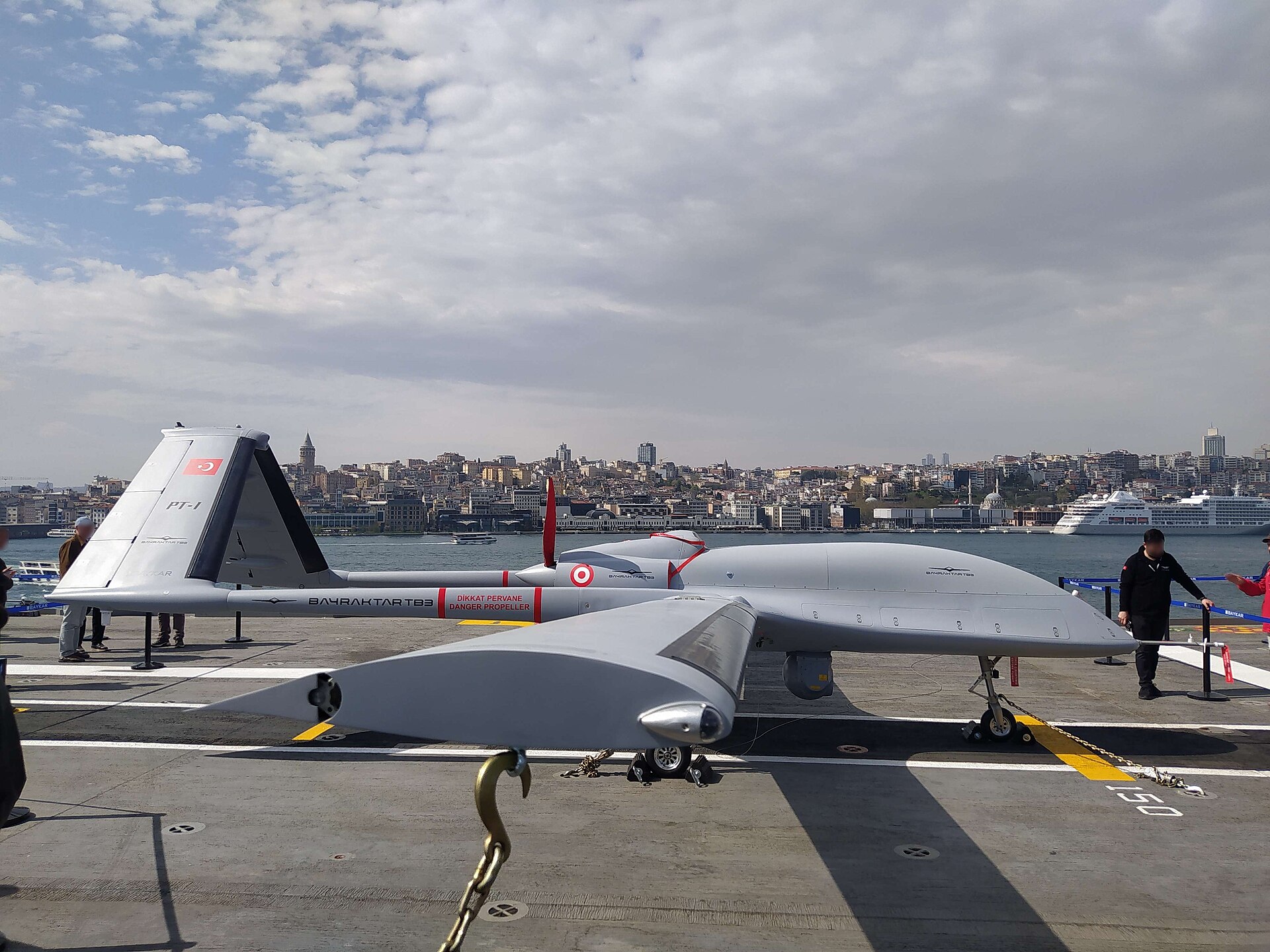
In February 2026, a Bayraktar TB3 was preparing for a mission on the deck of TCG Anadolu in the Baltic Sea. Take-offs and landings in snow, ice and strong winds were more than a test of one aircraft: they demonstrated a ship built in Türkiye operating alongside an unmanned aircraft developed in Türkiye. Baykar said the TB3 completed its mission during that phase of Exercise Steadfast Dart 2026 while adverse weather prevented other aircraft from flying. That comparison is based on the company’s account. [1]
Behind the scene lies an industrial network built over many years. Bringing the aircraft, engine, communications, sensors and munitions together for a single mission takes more than a factory. Design expertise, software, skilled people, suppliers and sustained production must all come together before a take-off from a ship’s deck can translate into export success.
That accumulated capability is what makes Türkiye stand out today. A country that once struggled to maintain and obtain spare parts for imported systems now sells platforms of its own design; in some programmes, it shares design and production responsibilities with foreign partners. This transformation does not mean dependence on foreign suppliers has ended. It does, however, point to industrial capacity that is changing the nature of that dependence and the country’s bargaining power.
The embargo’s lasting imprint
The US arms embargo imposed in 1975 following Türkiye’s 1974 military operation in Cyprus, and lifted in 1978, exposed the vulnerability of Turkish defence procurement. The political cost of an inventory dependent on spare parts, licences and export permissions made domestic production an enduring concern of the state. [2]
ASELSAN was founded on 14 November 1975 by the Turkish Land Forces Foundation. Communications and radio production were central to its early years. Turkish Aerospace traces its roots to 1973; the Turkish-American partnership established in 1984 to produce F-16s marked a separate stage in its industrial development. Roketsan was founded in 1988. According to Baykar’s own history, the company began research into unmanned aerial vehicles in 2003. [3][4][5][6]
Set side by side, these founding dates reveal a sector built in stages. Licensed production, maintenance, subsystem development and original design followed one another. Today’s exports rest on engineering knowledge accumulated by successive generations.
The $10 billion threshold: what the figures show
According to figures announced by Haluk Görgün, head of Türkiye’s Defence Industry Agency, defence and aerospace exports reached $10.054 billion in 2025. New export contracts signed that year were reported at $17.8 billion. The two figures measure different things: one records exports made during the year; the other represents orders that may extend over subsequent years. [7]
| Indicator | Period | Reported result |
|---|---|---|
| Defence and aerospace exports | 2025 | $10.054 billion |
| New export contracts | 2025 | $17.8 billion |
| SIPRI ranking of major arms exporters | 2021–2025 | 11th |
| SIPRI share of global arms exports | 2021–2025 | 1.8% |
SIPRI’s study published in March 2026 ranked Türkiye as the world’s 11th-largest arms exporter in 2021–2025. Export volume rose by 122 per cent compared with the previous five-year period, while its global share increased from 0.9 per cent to 1.8 per cent. [8]
There is an important distinction here: SIPRI’s measure of the volume of major arms transfers is not commercial export revenue in dollars. The two datasets cannot be added together, but both point in the same direction: Türkiye’s weight in the international defence market is growing. The United States’ 42 per cent share over the same period is also a reminder of the continuing gap in scale. [8]
The transformation of Türkiye’s defence industry is measured in more than rising sales. The deeper change lies in its ability to design more of a platform’s components and sustain their production.
Baykar: from an aircraft to an international production network
The Bayraktar TB2 has become one of the Turkish defence industry’s best-known products worldwide. The company announced that the platform had surpassed one million flight hours by the end of 2024. That milestone reflects something different from the attention surrounding a prototype: accumulated experience in sustained operations, maintenance, training and feedback from the field. [9]
Baykar reported exports of $2.2 billion in 2025, accounting for 88 per cent of its total revenue. These are the company’s own figures. It also said export contracts had been signed with 36 countries for the TB2 and 16 for the Akıncı. Because these customer groups overlap, the country counts cannot be added together to produce a separate total. [6]
Following the TB2, the Akıncı, the shipborne TB3 and the jet-powered Kızılelma form a family of products addressing different needs. The platforms are not all at the same stage of development: sales, operational maturity and deliveries must be distinguished between a system already in use and one still undergoing tests. Kızılelma’s trials should therefore be read as progress in a technology programme, rather than proof that an entire fleet has entered service.
Expansion in Europe is broadening the company’s business model. Baykar announced that it completed its acquisition of Piaggio Aerospace on 30 June 2025. LBA Systems, its equally owned joint venture with Leonardo, has also created a new base for developing and producing unmanned systems in Europe. [10][11]
The industrial significance of this expansion goes beyond reaching new customers. Entering different certification regimes, production standards and supply networks means moving from exporter to multinational production partner. Its success will be judged by how far the announced partnerships translate into delivered products and sustainable production.
ASELSAN: the growing importance of the systems out of sight
A photograph of a combat aircraft or a ship makes the front page; the company producing its radar, communications and electronic warfare systems often remains in the background. ASELSAN’s story has grown within this less visible layer. Beginning with radio production, it has become one of the companies bringing different air, land and naval platforms into a shared electronic ecosystem.
According to the company’s 2025 results, revenue reached 180.4 billion Turkish lira. New overseas orders exceeded $2 billion, while its order backlog passed the $20 billion mark. Research and development expenditure was reported at $1.36 billion. An order backlog indicates future business; it is not the same as revenue already received. [12]
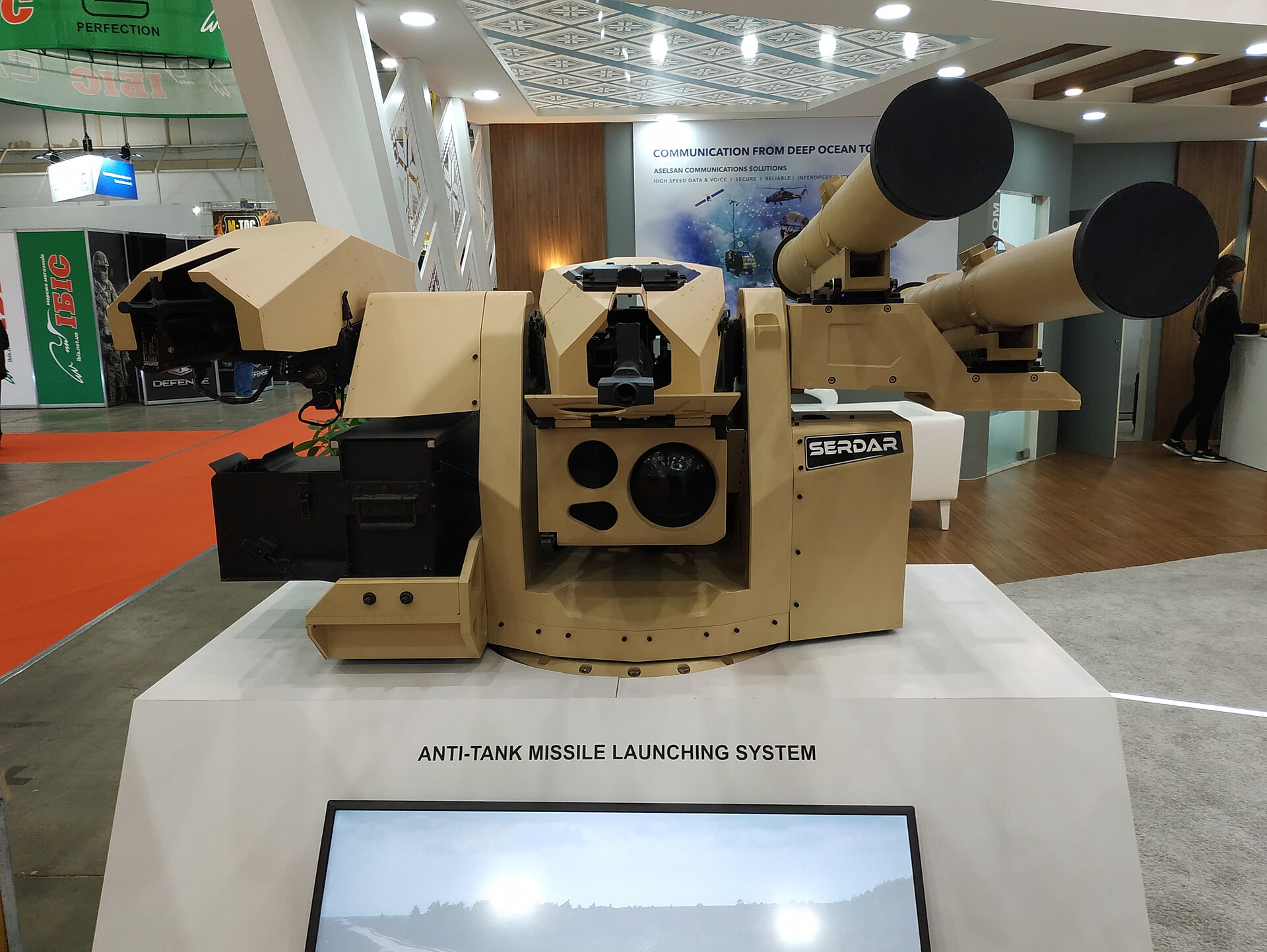
The Steel Dome programme aims to make sensors, command-and-control systems and air defence assets of different ranges work together. ASELSAN’s role rests on the connections between systems more than on any single device. Assessing a target detected by radar and passing it to the appropriate defensive asset illustrates why electronics and software capability matter strategically. [13]
For the sector, the critical task is translating that capability into serial production. Large order books alone do not guarantee deliveries: production lines, subcontractors, skilled workers and testing infrastructure must grow at the same pace. ASELSAN’s investments in research and manufacturing are therefore an industrial indicator with significance beyond the balance sheet.
Roketsan: munitions complete a platform’s value
Roketsan’s story began in 1988 with the aim of building expertise in missiles and rockets. Its product family now includes MAM munitions used on unmanned aircraft, the Atmaca anti-ship missile and missile components for different air defence systems. [5]
An unmanned aircraft’s export success cannot be separated from the success of the sensors and munitions it carries. The aircraft manufacturer, electronics company and munitions developer work together to meet the same customer’s mission requirements. This is where the defence industry’s multiplier effect emerges: selling a single platform can open the door to products from several domestic suppliers.
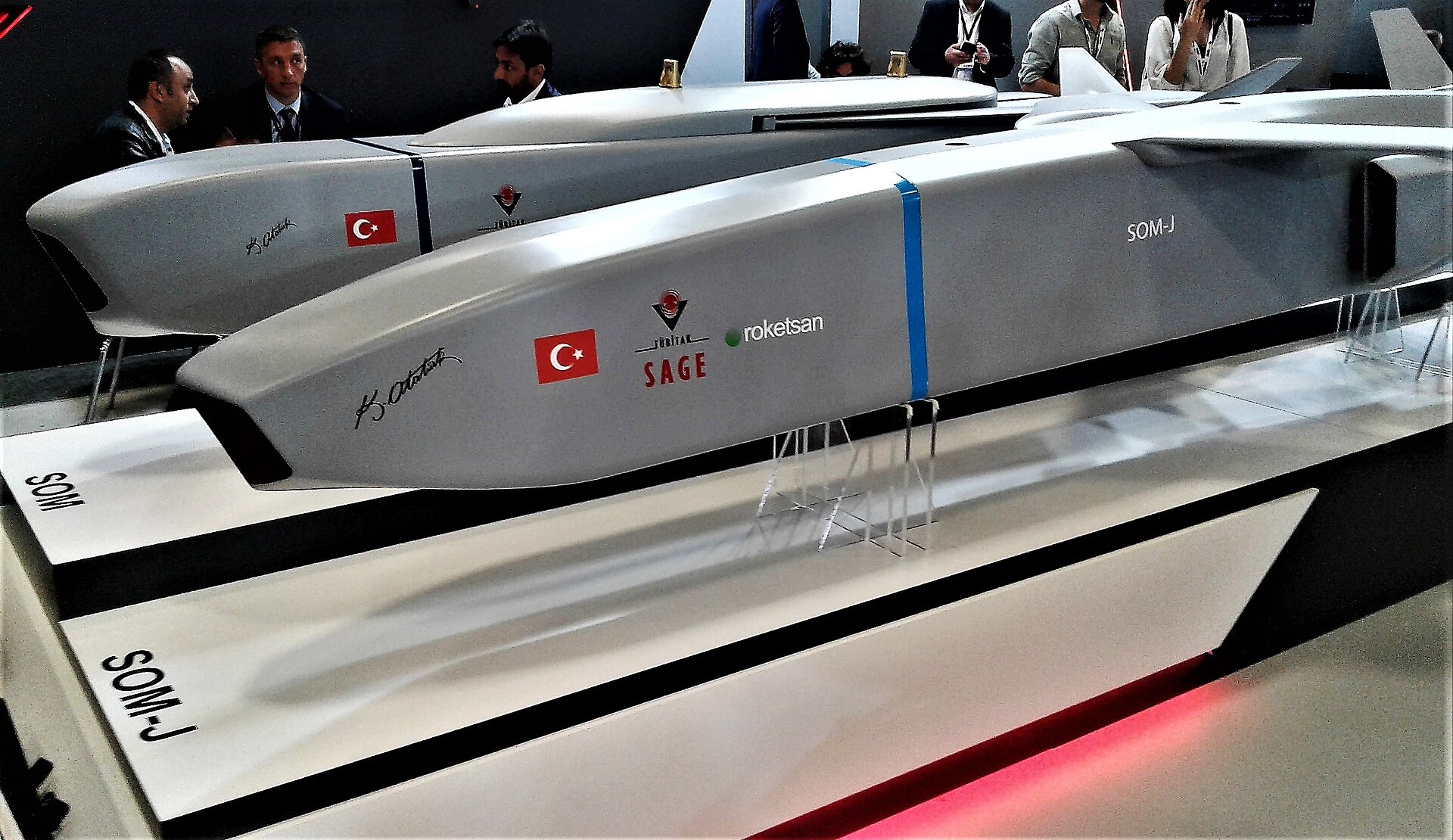
Unveiled at IDEF 2025, Tayfun Block-4 was among the projects demonstrating Roketsan’s move towards larger systems. The description “hypersonic” used at its unveiling comes from the official announcement. A ballistic missile reaching high speeds is not the same as a claim about a hypersonic weapon system whose manoeuvrability has been independently verified. Presenting undisclosed range and performance figures as established facts does nothing to explain the progress that has actually been made. [14][15]
Nor can Roketsan’s importance be understood solely through the size of its largest missile. Regular production of smaller munitions, their integration with different platforms, export permissions and long-term customer support determine the everyday workings of commercial success.
Turkish Aerospace: KAAN’s flight, HÜRJET’s route to Europe
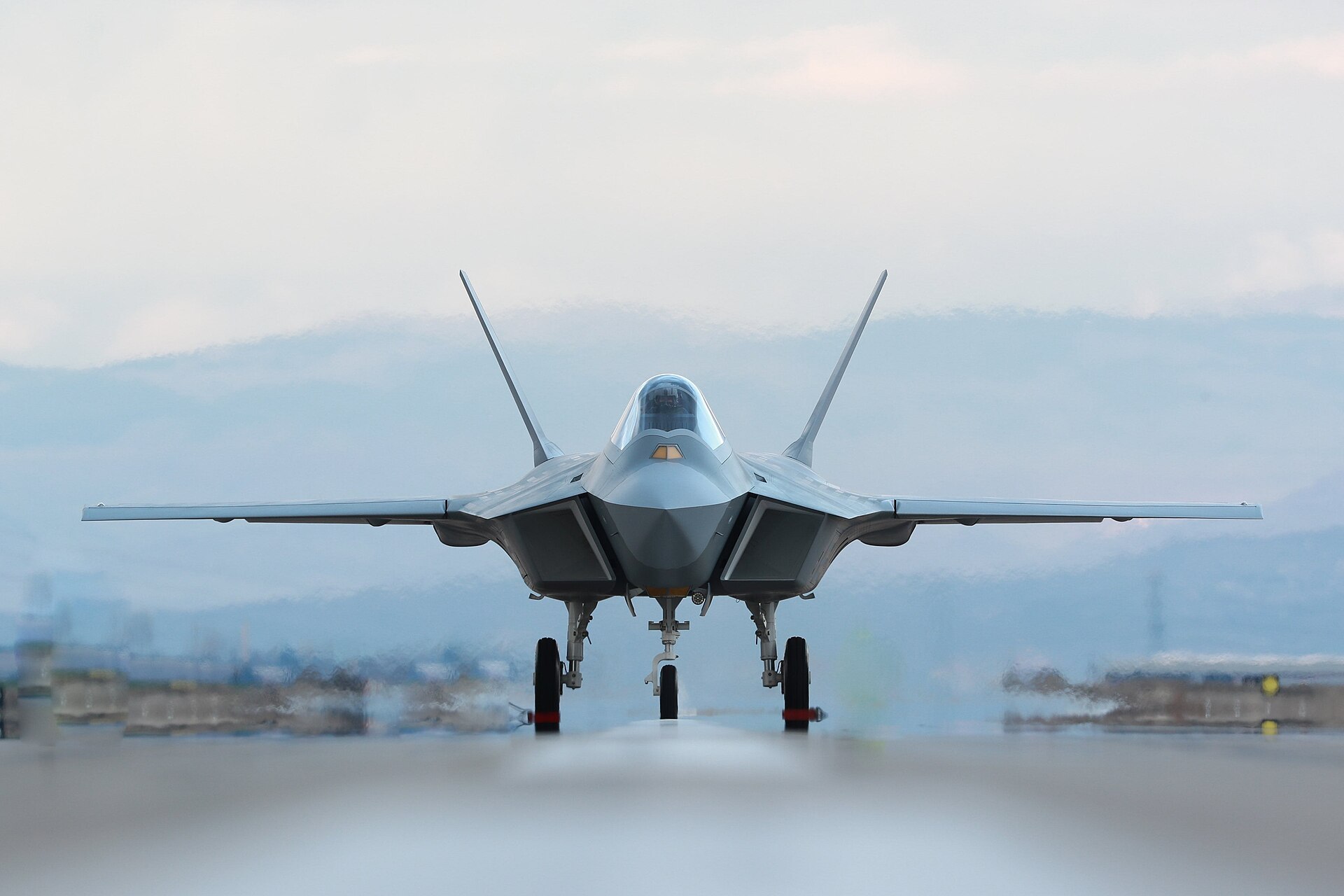
KAAN made its first flight on 21 February 2024. It was an important milestone in a long development programme. Getting a prototype airborne is not the same stage as serial production, operational capability or customer delivery, but it is one of the essential steps towards them. [16]
An agreement for 48 KAAN aircraft for Indonesia was announced in 2025; the definitive contract was signed at IDEF that year. The number illustrates the programme’s export scale. On price, however, varying estimates should not be presented as the definitive contract value: because no confirmed official value has been publicly disclosed, this report does not give a sale price. Aircraft on order and aircraft delivered are also kept separate. [17]
KAAN’s next stages depend on engine supply and production capacity as well as prototype testing. Developing a domestic engine is therefore one of the programme’s central objectives. A flying prototype does not mean dependence on foreign suppliers has ended in every area; equally, continuing dependence does not erase the design and integration expertise already gained.
HÜRJET is opening a different door into Europe. Airbus’s announcement of 28 April 2026 confirms 30 HÜRJET-based aircraft as part of Spain’s new combat pilot training system. Airbus is the prime contractor and Turkish Aerospace the aircraft manufacturer; the system adapted to Spanish standards is called SAETA II. [18]
The timetable has two stages. The delivery process for the first 21 aircraft is scheduled to begin in 2028, while deliveries of the final SAETA II configuration equipped with Spanish systems, together with the ground training system, are planned for 2031–2035. The year 2028 should therefore not be read as the completion date for the entire programme. [18]
Spain’s example also shows that the customer is buying more than a finished aircraft. Local industrial participation, avionics adaptations, simulators, maintenance and training infrastructure are part of the agreement. Competition for Turkish defence products in the European market is increasingly taking shape through this comprehensive partnership model.
The real strength behind the four companies
Baykar, ASELSAN, Roketsan and Turkish Aerospace are the most visible faces of the transformation. But these platforms could not exist without engine manufacturers, shipyards, precision component makers, software teams and research organisations. The success of the large companies depends on the quality and continuity of the supply networks they work with.
Rather than treating a domestic-content percentage as a definitive verdict, it is more revealing to ask where each component is designed and manufactured, and which permissions it requires. Engines, radars, flight software, munitions and maintenance networks can involve different dependencies. The presence of a domestic component in one programme does not mean another programme uses the same component.
People are central to this picture too. The testing experience a design team accumulates over years cannot be bought at short notice. Training engineers, retaining experienced staff and enabling younger teams to develop the next product are as consequential as an export contract.
The next test of success: delivery
Measured against the procurement vulnerabilities of fifty years ago, the Turkish defence industry has undergone a clear transformation. Completed exports, international rankings, prototypes that have flown and foreign partnerships are measurable elements of that change. The real test of future success, however, will be delivering orders on time, supporting products throughout their service lives and closing gaps in critical technologies.
The distinction between a production target and a completed result must be maintained. As of this report’s publication on 26 October 2026, schedule announcements alone are not treated as evidence that KAAN’s new prototype flight or Kızılelma’s first service delivery has been completed.
Look again at the deck in the Baltic and there is more to see than an unmanned aircraft. Behind it are capabilities accumulated from licensed production through to original design, engineering that brings different companies together, and a growing customer network. The rise of Türkiye’s defence industry is the story of that accumulated capability finding a place in world markets. The next chapter will be written by the products it delivers.
Based on reporting from: Baykar — TB3 operations in the Baltic, February 2026; US Department of State — historical memorandum on the arms embargo; ASELSAN — official company history; Turkish Aerospace — company history; Roketsan — company profile and products; Baykar — 2025 export results; Anadolu Agency — Görgün on 2025 exports and new contracts; SIPRI — Trends in International Arms Transfers, 2025; Baykar — TB2 exceeds one million flight hours; Baykar — Piaggio acquisition completed, 30 June 2025; Leonardo — LBA Systems joint venture, 16 June 2025; ASELSAN — 2025 results and June 2026 investor presentation; Directorate of Communications — Steel Dome programme, 27 August 2025; Anadolu Agency — Tayfun Block-4 unveiling at IDEF 2025; The War Zone — analysis of Tayfun Block-4 claims; Turkish Aerospace — 2024 sustainability report, KAAN first flight; Turkish Aerospace — definitive contract for 48 KAAN aircraft for Indonesia; Airbus — Spain’s HÜRJET-based SAETA II programme, 28 April 2026.
Source documents
18- Baykar — TB3 operations in the Baltic, February 2026baykartech.com
- US Department of State — historical memorandum on the arms embargohistory.state.gov
- ASELSAN — official company historywwwcdn.aselsan.com
- Turkish Aerospace — company historytusas.com
- Roketsan — company profile and productsroketsan.com.tr
- Baykar — 2025 export resultsbaykartech.com
- Anadolu Agency — Görgün on 2025 exports and new contractsaa.com.tr
- SIPRI — Trends in International Arms Transfers, 2025sipri.org
- Baykar — TB2 exceeds one million flight hoursbaykartech.com
- Baykar — Piaggio acquisition completed, 30 June 2025baykartech.com
- Leonardo — LBA Systems joint venture, 16 June 2025leonardo.com
- ASELSAN — 2025 results and June 2026 investor presentationcdn.aselsan.com
- Directorate of Communications — Steel Dome programme, 27 August 2025iletisim.gov.tr
- Anadolu Agency — Tayfun Block-4 unveiling at IDEF 2025aa.com.tr
- The War Zone — analysis of Tayfun Block-4 claimstwz.com
- Turkish Aerospace — 2024 sustainability report, KAAN first flighttusas.com
- Turkish Aerospace — definitive contract for 48 KAAN aircraft for Indonesiatusas.com
- Airbus — Spain’s HÜRJET-based SAETA II programme, 28 April 2026airbus.com
File updates
Report published
Editorial note
This feature draws on the linked public records, company disclosures and reporting reviewed on 26 October 2026. It separates export receipts, orders and future delivery targets. Manufacturer performance claims are attributed; no new interviews were conducted. All photographs are authentic, credited and dated; archival images do not depict the 2026 Baltic exercise.
Submit a response or correction ↗︎Reader comments
Verified members can comment. Comments appear after editorial approval. Please address the evidence and avoid personal information.
No published comments yet.
Sign in / Create account →Stay with the story.
Follow The Ledgers for new investigations, developments in our case files and videos.
Choose The Ledgers in Google’s source preferences. Availability is determined by Google.