
Investigation teaser
Open videoThe Ledgers investigation teaser. The video is in English.
SUMMARY
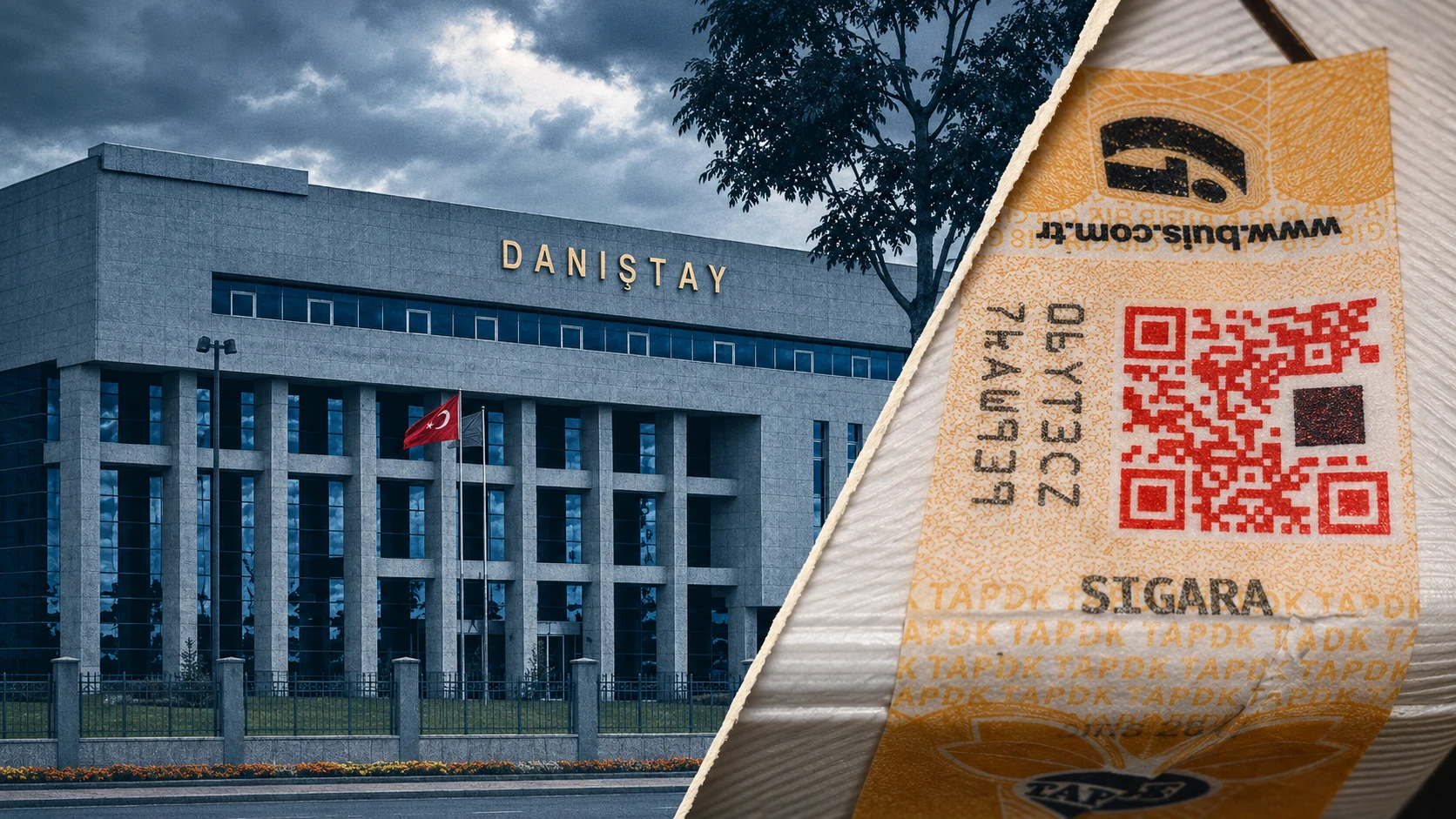
This investigation brings four names to the same table: Gate Elektronik, branded “close to the parallel structure” in 2014; Switzerland’s SICPA, which faced Gate over both identity cards and excise stamps; Kibar Holding, SICPA’s partner in Turkey; and FETÖ, the subject of allegations surrounding them all. There is another seat on SICPA’s side of the table, occupied by Cüneyd Zapsu, a consultant to the Swiss company from April 2012. The route to that table leads through one man. In August 2026, during an operation targeting the Süleymancı movement’s money man, investigators tracing vehicles assigned to former interior minister İdris Naim Şahin came across a name: Nevzat Büküm. He spent six years as a ministerial adviser and worked on the systems that carry the state’s data, from MOBESE to MERNİS. He was named as a consultant on the biometric ID tender described in 2014 as “close to the parallel structure” and ran for parliament for the AK Party in 2015. A ByLock record in the case file and a 2011 tip-off alleging blackmail came under renewed scrutiny fifteen years later. When we followed the trail, the trail led beyond a single religious community. From Gate Elektronik to SICPA, Kibar Holding’s partner, we found the same people around two public tenders worth hundreds of millions of lira.
I A man for all seasons: Muğla, 21 August 2026, 09.50
The Volvo stopped at the CNS junction bears the registration 34 SL 313. At the wheel is Mehmet Özmen, the owner of a car rental company. In the back are Hilmi Tuna Kuriş, brother of Süleymancı leader Alihan Kuriş and wanted for eight days, and Erhan Yılmaz. They are heading for Bozburun in Marmaris. Their aim is to leave the country. Inside the car is €58,000. Former interior minister İdris Naim Şahin’s name is on the document assigning the vehicle. The annual rent: 1,000 lira.

That same day a second vehicle assigned to Şahin, an Audi Q7 registered 34 S 7815, set off from Bodrum for Bursa. At a service station the three Belarusian nationals travelling in it, all carrying diplomatic passports, were transferred to another vehicle. The next day they boarded a flight to Minsk. The Audi turned from Bursa towards Ankara.
According to information obtained by The Ledgers, Nevzat Büküm was among those detained in the vehicle returning to Ankara and subsequently remanded in custody. Press reports reflected in the investigation file say just two things about Büküm so far: he holds a stake in a company in which Ömür Yücel is also a partner, and there is a ByLock record against his name. Behind those two sentences, however, is a life that runs through two of Turkey’s most sensitive public tenders of the past fifteen years.
II The adviser
Nevzat Büküm graduated in electrical and electronics engineering from Hacettepe University in 1996. He worked on IT and security infrastructure at the Turkish broadcaster TRT and on electronic systems at Ankara Metropolitan Municipality. In 2003 he joined the Ministry of Public Works and Settlement as a “political adviser and adviser to the minister on IT and electronic systems”. In 2005 he moved to the Interior Ministry in the same capacity. The minister at the time was Abdülkadir Aksu. Büküm stayed on under Beşir Atalay and was still there when İdris Naim Şahin became minister in July 2011. He left in November 2011.
On his own page he listed what he worked on over those six years: the Urban Security Management System, known as MOBESE. The 112 emergency service. “Homeland Security”. A web-based update to MERNİS, the central population register. The National Address Database. The ministry’s E-İçişleri system. The Geographic Information System. Taken together, the list tells us one thing: Büküm knew how the data the Turkish state held on its citizens flowed through its systems. Cameras, addresses, population records.
Then came assignments on acceptance committees at the state housing agency TOKİ, and then politics. On 1 November 2015 he was ninth on the AK Party’s list in Manisa. In 2018 he again sought the nomination. Of the three reasons he gave party organisations, the first was “to minimise dependence on foreign countries in defence industries and technology”. The third was “to serve as a bridge between the public and party organisations on the one hand, and the ministries on the other”. A bridge. Remember that word.
He came in under Aksu, stayed under Atalay, left under Şahin and ran on Erdoğan’s ticket. In 2026 his name turns up in the case of a religious movement’s money man travelling in vehicles assigned to Şahin. That is what we mean by a man for all seasons.
III 14 September 2011: A tip-off, and a resignation two months later
The most striking finding in the investigation file comes from fifteen years ago. On 14 September 2011, Istanbul Police’s Communications and Electronics Branch received a tip-off. It alleged that bribes were distributed through electronics companies, public tenders were interfered with, women were brought in from Belarus, selected officials were filmed with hidden cameras, and blackmail was used to steer tender outcomes. According to the tip-off, Mehmet Özmen “ran errands” for the operation, while Nevzat Büküm handled “the tender business of the electronics companies”.
Mehmet Özmen is the man who was driving Hilmi Tuna Kuriş to Bozburun in the Volvo in 2026. Fifteen years on, the same name in the same role.
Consider the date of the tip-off: September 2011. Büküm left his Interior Ministry post in November 2011. Two months. We do not know whose desk the tip-off reached at the time, why it was not acted on, or whether it had anything to do with Büküm’s departure. The minister at the time, İdris Naim Şahin, told the prosecutor: “I had no knowledge of the tip-off and heard nothing about it.” In the same statement he dismissed the great majority of the roughly 130 names read to him with “I don’t know them, I’m not familiar with them, this is the first I’ve heard of them”. He did acknowledge knowing four: Mehmet Özmen, Ömür Yücel, Süleyman Hilmi Kalcı and Nevzat Büküm.
The allegation concerning Belarusian women may appear in both the tip-off and the 2026 file by coincidence. It may also be coincidence that three people carrying diplomatic passports from Belarus were transported in a vehicle assigned to Şahin, that the mobile phone lines given to them were registered in Ömür Yücel’s name on 4 August, and that Yücel said in his statement that one of those vehicles had been given to “Lukashenko’s son and his security detail”. We will confine ourselves to recalling Justice Minister Akın Gürlek’s words about Şahin: “What he says does not match the evidence in the file.”
There is also a contradiction worth recording. The Belarusian press (Nasha Niva, 24 August) reports that Büküm himself made the 2011 tip-off. The Turkish press says Büküm was named in it. Was he the informant or the subject of the information? Without the original file we cannot answer. We put the question to the Ankara Chief Public Prosecutor’s Office.
IV 2012: Entrusting the nation’s identity cards to a company
Eight months on from the tip-off, in April 2012, the General Directorate of Population and Citizenship Affairs put the “Republic of Turkey Identity Card Rollout Project” out to tender. Every citizen would receive a biometric identity card with a chip. The tender was by invitation. One of the two firms that met the requirements withdrew. The contract went to Gate Elektronik, a company that came out of the Middle East Technical University technopark. It was signed on 14 May 2012. For the first time in the Republic’s history, citizens’ fingerprints, finger vein patterns and palm vein patterns would be collected in a single system. The successful bidder, rather than the State Mint, would produce the cards.
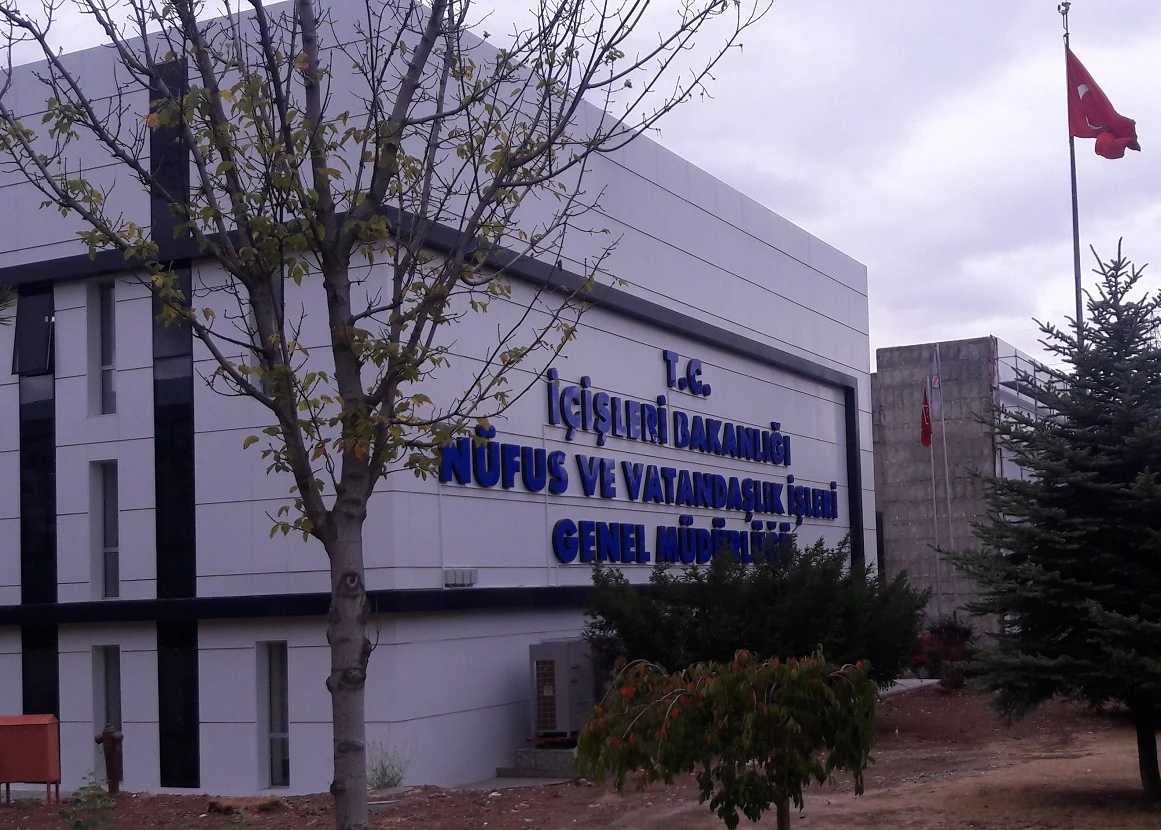
The cards did not arrive. The first cards, due for distribution in August 2013, were still nowhere to be seen in the summer of 2014. The building in Yenimahalle where the cards would be personalised had not been handed over to the authority. Nevertheless, the directorate, NVİ, advertised a new tender for 4 August 2014: 10 million cards, worth around 200 million lira. Six days before the presidential election.
On 20 July 2014, Sabah columnist Ferhat Ünlü described the tender as “tailor-made for a particular bidder” in an article titled “Mission: Impossible and biometric espionage”. He called Gate Elektronik “a firm close to the parallel structure”. He named two members of the project’s advisory team: Ali Özgür Aytaç, brother of Önder Aytaç, and “Nevzat Büküm, who, like Özgür Aytaç, was appointed as an adviser during Abdülkadir Aksu’s tenure as interior minister”. He named Yavuz Bacacı as another important figure in the project.
Ünlü made a further, more serious allegation. After winning the tender, he wrote, Gate had set up a company called Sina and was demanding a 20 per cent share from suppliers on every secure document project in Turkey, including driving licences, police identity cards and passports. “Gate Elektronik and the team working under it are effectively laying claim to every secure document project for the next 10 years.” He wrote that the State Mint and TÜBİTAK, the national research council, had deliberately been left out when the specifications were drawn up, and that the director general of the Mint had kept silent.
The tender was cancelled on 4 August. Eleven days later Yeni Şafak ran the headline “Had the tender not been cancelled, the US would have gained access to our identity data”. Its account was that, although the police had their own entirely domestic APFIS system, the specifications sought to entrust citizens’ biometric data to Oracle software. The specifications had been drawn up under Hasan Palaz, the head of TÜBİTAK BİLGEM who was removed after the encrypted-phone scandal.
Let us be clear about the evidence. The two articles appeared in pro-government newspapers in the political climate after 17–25 December. “Parallel structure” was the language of that period, and neither Sabah nor Yeni Şafak published a single supporting document. To date we have found no final conviction of Gate’s owners for FETÖ membership. Someone reading those articles in 2014 could have taken them for a conspiracy story written by a pro-government newspaper to sink a tender.
Yet twelve years later, Nevzat Büküm, one of those named in the article, turns up with a ByLock record in the file of an investigation into a religious community. In 2017 an arrest warrant was issued for Önder Aytaç in connection with the indictment concerning FETÖ’s media network. And the third name in the article, Yavuz Bacacı, turned up in our own archive.
V The bridge: Yavuz Bacacı
In “Payments, a rival and a success fee”, published on 1 October 2026, The Ledgers reported on the network of consultants SICPA assembled to retain the 2014 excise stamp contract. One of the central figures was Yavuz Bacacı, who corresponded with SICPA on behalf of Lettra Teknoloji. In an email dated 24 February 2014, Bacacı wrote: “I use the Gate email only for the Turkish Identity Card Project.”
In the spring of 2014, then, the same man was using one email address to run the state’s identity card project and another to negotiate a draft consultancy agreement with SICPA that provided for a 13.6 per cent success fee on the state’s excise stamp tender. In a note dated 30 May 2014, SICPA-Assan general manager Hakan Arıkan wrote beside Lettra’s name: “a second firm taking part on behalf of gate.” Years later, in 2017–2018, “Mr Yavuz Bacaci” appeared again in correspondence concerning millions of euros in consultancy fees invoiced to SICPA through Avialift LLC in the United States.
A 2024 decision by the 11th Civil Chamber of the Court of Cassation put the Gate–Lettra relationship on the judicial record. A bank had brought the case alleging a sham arrangement between the two companies. Lettra’s authorised representative had worked as a manager on Gate’s identity card project between 2012 and 2015. Lettra had been established in 2011, and one of its shareholders, Yeliz Bacacı, held 40 per cent. The court found that the alleged sham had not been proved. It did not dispute the business relationship.
How did the 2011 tip-off describe Nevzat Büküm? “He handles the tender business of the electronics companies.” His role in 2014? Consultant on Gate’s identity card project. And who was Ömür Yücel, the other partner in the company in which Büküm now has a stake? An official in the interior minister’s private office under Şahin. The person who delivered Şahin’s Volvo rental payment in cash to Özmen, registered phone lines for the Belarusians and gave the Audi to Lukashenko’s son.
VI The obstacle facing Gate: SICPA-Assan and Kibar
Identity cards were not the only major contract Gate Elektronik won in 2012. That same year Gate entered the tobacco and alcohol excise stamp tender with its French partner Prooftag. It won with a bid of 217 million lira, undercutting SICPA-Assan’s 324 million lira by 107 million.
Who stood behind SICPA-Assan? Kibar Holding. The joint venture between Switzerland’s SICPA and the Kibar family’s Assan group had won the Turkish Revenue Administration’s first excise stamp tender in late 2006. Since 2007 it had printed the stamp on every cigarette pack and bottle of alcohol sold in Turkey. The 2012 tender was the first time that monopoly was to be broken.
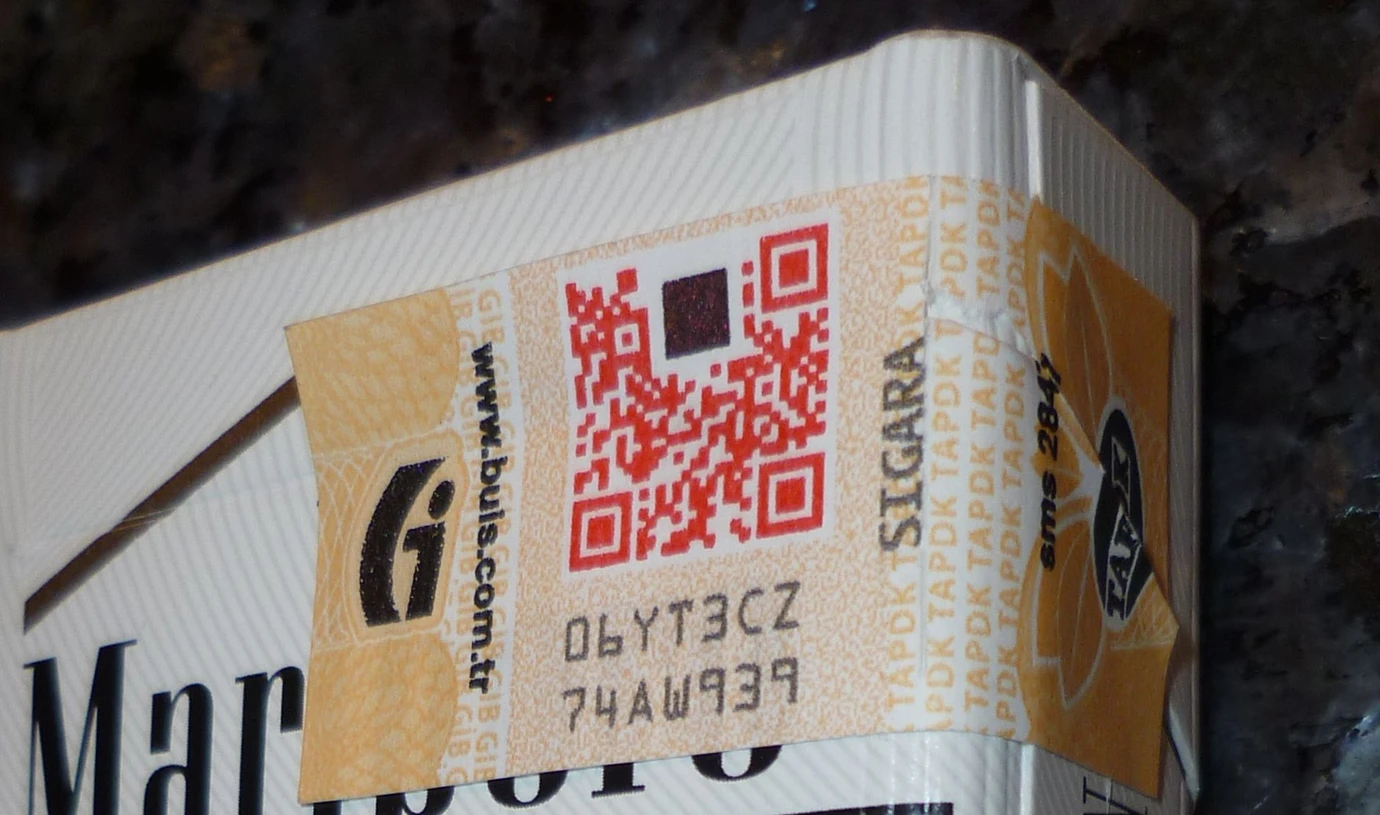
The monopoly held. On a challenge by SICPA-Assan, an administrative court annulled the award. In 2013 the Council of State upheld that decision by three votes to two. The Ledgers has a draft complaint prepared for submission to the Swiss federal prosecutor. It contains a message dated 6 January 2013 from SICPA executive Bruno Frentzel to consultant Ayşın Akman while the matter was before the Council of State: “For information. make sure we control the decision.” Make sure we control the decision.
A fresh tender in February 2014 was cancelled on the grounds that there was “no valid bid”. The SICPA consortium won the third tender in September 2014, for five years and 359.3 million lira. Gate and its partner Arjowiggins entered that tender too, and lost. The contract was signed on 9 December 2014. In 2015, with the Competition Board’s approval, Kibar transferred its SICPA-Assan shares to SICPA. The partnership ended in February 2016.
Consider the outcome. Gate Elektronik, which won two strategic tenders in 2012, had lost them both by 2014. In excise stamps, it lost through the Council of State’s ruling. In identity cards, it was branded part of the “parallel structure”. SICPA-Assan won the excise stamp contract. Gate’s identity card tender was cancelled. The second phase went to STM in 2016 for 128 million lira, and Lettra, Bacacı’s company, stayed on the project, this time as STM’s subcontractor. On 24 December 2025, Ankara’s 2nd Commercial Court of First Instance declared Gate Elektronik bankrupt.
Gate lost. The winners were those who changed sides.
VII Kibar’s own case
At this point Kibar Holding’s position needs to be put on the record without overstating it. Kibar was Gate’s competitor in the 2014 excise stamp tender, not “the partner of pro-FETÖ Gate”. The holding company does, however, have a separate FETÖ case of its own, and that matter has not been closed.
On 9 April 2018, former military prosecutor Ahmet Zeki Üçok petitioned the Istanbul Chief Public Prosecutor’s Office, alleging that Kibar Holding had provided financial support to FETÖ. The investigation was assigned number 2018/68909. Üçok’s allegations included relationships conducted through a “Kayseri team” inside the Finance Ministry and an attempt to influence MASAK, the Financial Crimes Investigation Board. On 5 August 2018 Kibar Holding rejected all the allegations as “unfounded and malicious” and announced that it would take legal action. In eight years, the outcome of that investigation has never been made public. We could not find it either.
Then there are the audio recordings from March 2014. In recordings attributed to Bilal Erdoğan and Fatih Saraç, there was talk of a donation of 1 million lira by Ali Kibar to TÜRGEV. Kibar denied the allegation, and the CHP’s Umut Oran submitted a parliamentary question. TÜRGEV has no connection to FETÖ. We cite the recording solely as a note on whose doors Kibar was knocking on while it sought to regain the excise stamp contract in 2012–2014.
One final distinction: the Assan Group targeted in a 2025 operation over allegations involving FETÖ and military espionage is separate from the Assan companies in the Kibar group that formerly partnered with SICPA. Kibar stated this on 2 September 2025. We have confirmed it.
VIII Where does Cüneyd Zapsu fit in?
There is one more chair at the table. It belongs to someone who sat on SICPA’s side, on neither Kibar’s nor Gate’s: Cüneyd Zapsu. A founding member of the AK Party, former chief adviser to President Erdoğan, and chairman of Balsu Gıda.
Zapsu’s own CV, drawn up in late 2012, contained two lines: “Consultant to Philip Morris International, since 2010” and “Consultant to SICPA Security Solutions SA, since April 2012.” Neither appears in his current biography. April 2012 was the month in which Gate Elektronik won the identity card tender and undercut SICPA-Assan by 107 million lira on excise stamps. In other words, SICPA retained Zapsu as a consultant at the very moment it first lost its monopoly in Turkey.
The investigation The Ledgers published on 19 October 2026 established what was paid, rather than what was bought. Between 2015 and 2019 Zapsu’s consultancy invoiced SICPA companies for 19.6 million lira. Of that sum, 7.96 million lira was paid as a “DÖSİMM share fee” after SICPA Turkey won the 3.9 billion lira museum ticketing tender in 2018. Payments stopped in September 2019. Documents held by The Ledgers take the chain further back. The first consultancy agreement was signed on 15 November 2012, six weeks after Gate’s excise stamp award was annulled. The second was signed on 14 November 2013, to take effect “upon the award of a new commercial contract to SICPA in Turkey”. The third was signed on 7 July 2014, two months before the September 2014 tender. In 2016, all these contracts were assigned “for strategic reasons” to a free zone company in Sharjah.
The draft complaint prepared for the Swiss federal prosecutor has one further detail. On 3 February 2014, the day of the excise stamp tender, SICPA executive Bruno Frentzel sent a message describing the situation with the tender and “thanking them for their support”. The recipients included both Ayşın Akman and Cüneyd Zapsu. Akman was the person who had received the message “make sure we control the decision” a year earlier. Today both sit on the board of the same company, Balsu Gıda: Zapsu as chair, Akman as an independent director.
None of this shows that Zapsu had any connection to FETÖ. Quite the reverse: Zapsu sat on the side that eliminated its “parallel”-branded rival and recovered its monopoly. That is precisely the question. In 2012–2014, when one of Gate Elektronik’s tenders was scuttled on the grounds that it was “close to the parallel structure” and it lost the other at the Council of State, why was one of the advisers closest to the government a paid consultant to the winning Swiss company? What did he do in return for that pay? What service did Zapsu sell to SICPA in 2012? What did “support” mean? We sent him those questions.
IX The questions
More questions in this investigation remain unanswered than have been resolved. We are putting them on the record and have sent them to those concerned.
To the Ankara Chief Public Prosecutor’s Office: In what capacity was Nevzat Büküm detained, and on what charge was he remanded in custody? Who made the tip-off of 14 September 2011, and whom did it concern? Which authority received it in 2011, and why was it not acted on?
To the Interior Ministry: When was a ByLock record first identified for a person who worked on MERNİS, the National Address Database and MOBESE as an adviser to the minister between 2005 and 2011? Has any administrative or judicial action been taken concerning this person since 2016?
To the General Directorate of Population and Citizenship Affairs: Was the directorate informed of the names of Gate Elektronik’s advisory team on the 2012 identity card tender? Were the company called Sina and the allegation of a 20 per cent share examined in 2014? Why was the 4 August 2014 tender cancelled?
To Kibar Holding: What was the decision in Istanbul Chief Public Prosecutor’s Office investigation 2018/68909? During the 2012–2014 excise stamp tenders, did you contact the Revenue Administration, the Finance Ministry or members of the judiciary, either directly or through consultants?
To SICPA SA: What did “Make sure we control the decision” mean? Why did you negotiate a success fee during the excise stamp tender with someone who worked on Gate’s identity card project (Yavuz Bacacı)? What service did you receive from Cüneyd Zapsu from April 2012 onwards?
To Cüneyd Zapsu: What did the consultancy relationship with SICPA Security Solutions SA that began in April 2012 cover? During the 2012–2014 excise stamp tenders and the Council of State proceedings, did you contact the Revenue Administration, the Finance Ministry or members of the judiciary on SICPA’s behalf? What was the “support” for which thanks were expressed in the message of 3 February 2014? Why does your current CV omit the consultancy?
To Nevzat Büküm’s lawyer: What is your client’s account of the 2011 tip-off, his consultancy for Gate Elektronik, his partnership with Ömür Yücel and the ByLock record?
This investigation will be updated as responses arrive.
X Why this investigation
In Turkey since 2014, the “parallel structure” label has sometimes been used as evidence of a crime and sometimes as a means of eliminating a competitor. Gate Elektronik’s story shows that both are possible. A company may have worked with people who genuinely warranted suspicion, and that suspicion may also have helped a more powerful competitor preserve its excise stamp monopoly. The two possibilities can coexist.
Nevzat Büküm’s story is simpler and more troubling: an adviser to Aksu, an adviser to Atalay, an official in Şahin’s ministry, a consultant on the “parallel” tender in 2014, an AK Party candidate in 2015, and in 2026 a partner in the network of vehicles that spirited away the Süleymancı movement’s money man. In every era he went in through one door and came out through another. Being a man for all seasons is no crime. But when someone does the same work in every era, handling “the tender business of the electronics companies” and staying close to the state’s most sensitive data throughout, the public is entitled to answers.
We are waiting, too.
The Ledgers is an independent, Switzerland-based investigative news outlet covering economic crime, corruption and the misuse of public resources. The allegations reported in this investigation draw on publicly available investigation records, press reports and documents held by The Ledgers. The presumption of innocence applies to the people and institutions named unless there is a final judgment against them. Requests for a right of reply: editor@theledgers.news
File updates
Report published
Reader comments
Verified members can comment. Comments appear after editorial approval. Please address the evidence and avoid personal information.
No published comments yet.
Sign in / Create account →Stay with the story.
Follow The Ledgers for new investigations, developments in our case files and videos.
Choose The Ledgers in Google’s source preferences. Availability is determined by Google.